
Basalt garlic
Allium basalticum
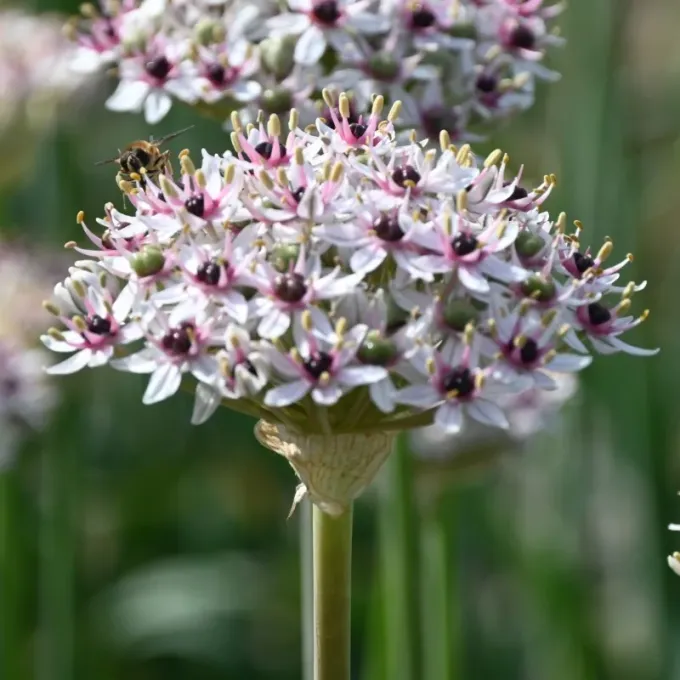
Description
Sowing dates
Sowing seeds of basalt garlic should ideally occur in autumn, allowing for a period of cold stratification during the winter months. This process is crucial for breaking seed dormancy.
If spring sowing is planned, seeds must be planted at a shallow depth of approximately 1 to 2 centimeters. Keeping the soil consistently moist until germination is vital for successful establishment.
Bulb division is the preferred method for propagation. It should be conducted in late summer, during the plant's dormant phase, to minimize stress on the parent bulb and the offsets.
Spacing is essential for the health of the planting. Individual bulbs should be planted with sufficient room to allow air circulation between foliage, typically 15–20 centimeters apart.
Maintaining a clean growing area is necessary when sowing. Removing weeds early in the season prevents competition for sunlight and nutrients, which is especially important for young seedlings.
Growing requirements
Basalt garlic (Allium basalticum) is a fascinating perennial bulbous plant belonging to the Amaryllidaceae family. It is named for its native habitat, where it grows primarily in rocky, basalt-rich soils.
The plant thrives in well-drained, alkaline to neutral soils. It is particularly well-suited for rock gardens or areas where soil drainage is excellent, preventing waterlogging of the bulbs.
Full sun is a strict requirement for Allium basalticum. Sufficient light exposure ensures sturdy stems and prevents the plant from becoming leggy or weak during the growing season.
Climatic requirements mirror the environmental conditions of the Middle East, where the species originates. It is hardy and capable of surviving cold winter temperatures provided the soil is dry.
Agricultural management is relatively simple as the plant is adapted to nutrient-poor, rocky substrates. Minimal fertilization is required, as excessive nutrients may favor foliage growth over bulb development.
Main diseases and pests
Excessive soil moisture is the primary threat to the health of Allium basalticum. Prolonged exposure to saturated soil can quickly cause bulb and basal rot, which is often irreversible.
Fungal pathogens such as Fusarium and various molds are significant risks in poorly aerated environments. Proper drainage remains the most effective defense against these diseases.
Pests, particularly onion flies, may target the plant during the initial stages of growth. Monitoring for larvae is important in regions where onion pests are prevalent.
Root damage from soil-dwelling insects like wireworms can weaken the plant. Utilizing integrated pest management practices helps maintain a healthy balance without relying on heavy chemical use.
Good sanitation practices, including the removal of dead plant material at the end of the season, significantly reduce the potential for overwintering pests and pathogens.