
Tapertip onion
Allium acuminatum
Description
Growing requirements
The tapertip onion (Allium acuminatum) is a perennial bulbous plant belonging to the Amaryllidaceae family. It is native to the western regions of North America, where it thrives in rocky, well-drained soils.
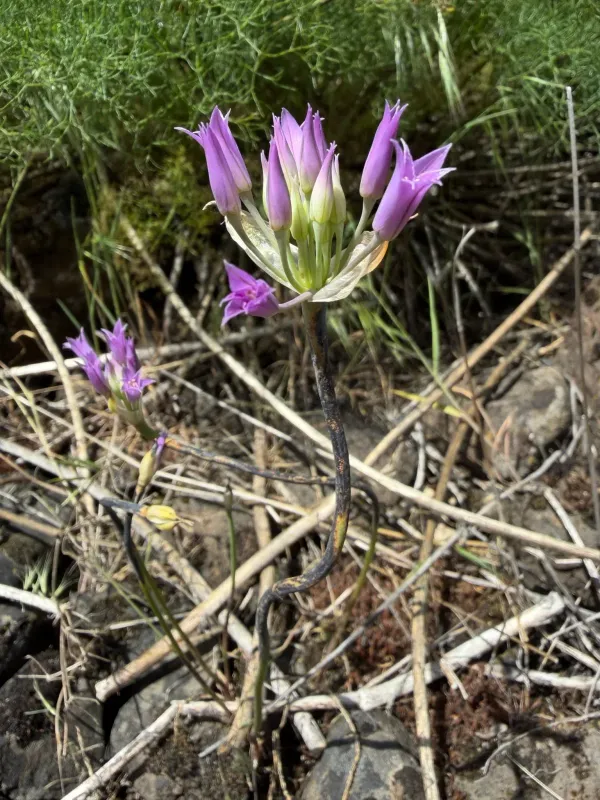
This species features small, egg-shaped bulbs covered in a fibrous, reticulated coat. Its leaves are narrow, channelled, and usually wither before the plant reaches its full blooming stage.
The inflorescence consists of an umbel of rose to purple-colored flowers. The specific epithet "acuminatum" refers to the sharp, pointed tips of the tepals, which are a defining characteristic of this botanical species.
To cultivate this onion successfully, gardeners must ensure excellent soil drainage. It requires full sun exposure and performs best in sandy or gravelly soil profiles that mimic its natural habitat.
The plant is highly adapted to arid environments and exhibits significant drought tolerance. During the dormancy period in late summer, the bulbs require dry conditions to prevent physiological stress or decay.
Main diseases and pests
The primary threat to Allium acuminatum is soil-borne fungal pathogens, particularly those causing basal rot when the substrate remains overly saturated for prolonged periods.
Onion maggots represent a significant pest threat, as they feed on the bulb tissues, potentially leading to the rapid decline of the entire plant cluster if left uncontrolled.
Thrips can also infest the foliage, causing stippling and disfigurement, which can weaken the bulb's ability to store energy for the following season's growth.
Competitive weeds are detrimental as they reduce airflow and increase local humidity, which facilitates the growth of powdery mildew on the leaves and stalks.
Maintaining a clean, weed-free environment and avoiding excessive irrigation during dormant phases are the most effective non-chemical strategies for mitigating these biological threats.