
Acis
Acis hybrids
Description
Growing requirements
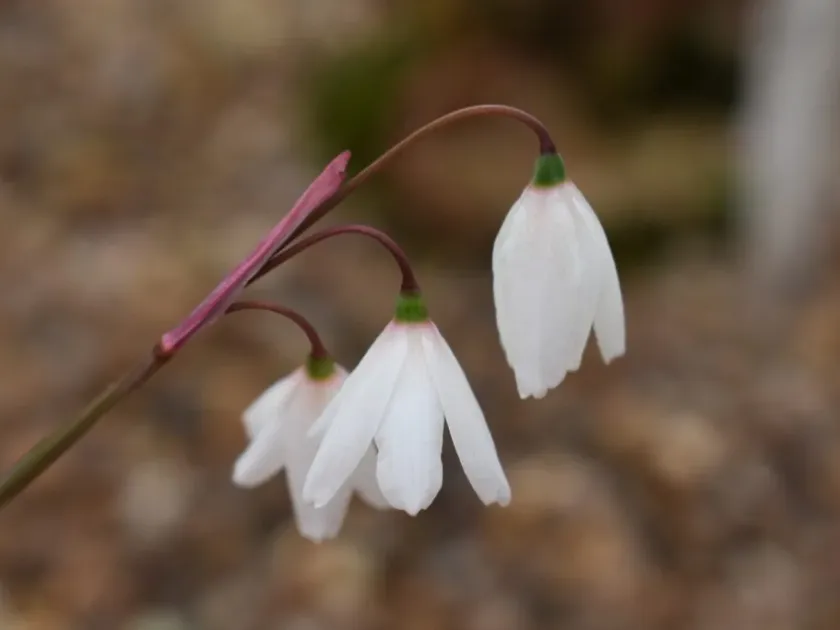
Acis is a genus of bulbous perennial plants belonging to the family Amaryllidaceae. Often confused with the snowdrop (Galanthus) or snowflake (Leucojum), these plants are distinguished by their specific floral morphology, characterized by the absence of green spots on the tepals and a distinct bell-shaped appearance.
The genus originates from the Mediterranean region and parts of North Africa. In their natural habitat, they are found in rocky areas and sparse woodland, reflecting their adaptability to well-drained environments. Cultivation success depends largely on mimicking these specific natural conditions.
The primary requirement for Acis is excellent soil drainage. Heavy soils should be amended with grit, sand, or perlite to ensure that water does not accumulate around the bulbs, which are prone to fungal rot. The soil should ideally be neutral or slightly alkaline for optimal nutrient uptake.
Acis thrives in sunny to partially shaded locations. In colder climates, bulbs require winter protection or should be lifted, as most species are not fully hardy. Providing a consistent growing environment during the spring or autumn vegetative cycle is crucial for subsequent bulb multiplication.
The horticultural utility of Acis is focused on rock gardens, alpine houses, and early-season displays. Their delicate stature makes them ideal for naturalizing in grass or planting in small groups where their subtle beauty can be appreciated during the early spring or late autumn blooming periods.
Main diseases and pests
The main threat to the health of Acis bulbs is dampness, which facilitates the growth of pathogens such as Botrytis and Fusarium. These fungi attack the root system and the base of the bulb, often resulting in sudden plant decline if proper drainage is not maintained throughout the dormant season.
Pest management is essential, with bulb mites and aphids being the most common adversaries. Mites can bore into the bulb tissue, making the plant susceptible to secondary infections, while aphids may transmit viruses. Regular inspection and the use of healthy, disease-free bulbs are the primary methods of defense.