
Queen Victoria agave
Agave victoriae-reginae
Description
Growing requirements
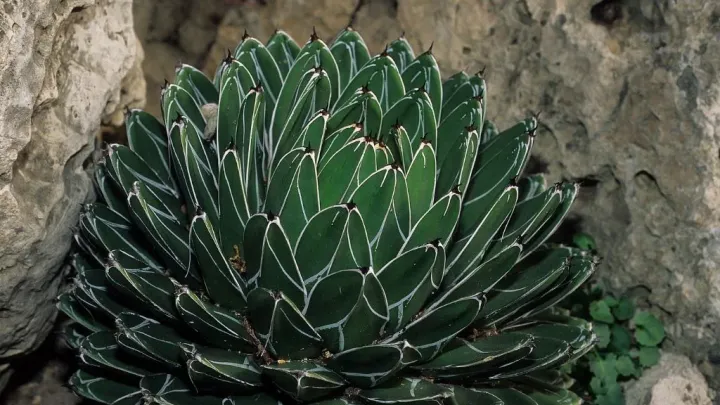
The Queen Victoria agave, scientifically known as Agave victoriae-reginae, is a slow-growing member of the Asparagaceae family. Native to the rugged mountains of northeastern Mexico, it is highly prized for its symmetrical, compact, and architectural rosette form.
Cultivation of this species requires a location with maximum sunlight. Being a desert plant, it thrives in high-intensity light environments, which are essential to prevent etiolation and maintain the distinct white leaf markings.
The ideal substrate for this agave must be highly porous and inorganic. A mixture of sharp sand, pumice, and minimal loam provides the necessary drainage to prevent the roots from rotting, which is the most common cause of failure in cultivation.
Watering requirements follow the seasonal cycle: frequent water during the growing season is allowed only when the soil is completely dry, while in winter, the plant should remain almost entirely dry to survive at lower temperatures.
This species is valued for its hardiness compared to other succulents, capable of surviving brief frosts, provided the environment is kept dry. Proper ventilation is as crucial as light to mimic its native arid climate.
Main diseases and pests
The primary agricultural threat to this species is root rot, which typically stems from poor soil drainage or overwatering. Once rot reaches the core of the rosette, the plant is usually beyond recovery.
Scale insects and mealybugs are the most common pests for Agave victoriae-reginae. These pests hide deep within the dense leaf axils, making physical removal difficult and necessitating systemic insecticide treatments.
Fungal infections can occur when the plant is kept in high-humidity environments with stagnant air. Dark spots on the leaves indicate potential tissue necrosis, requiring immediate removal of the affected areas.
Careful monitoring is essential, as the tightly packed leaves of the plant create sheltered microenvironments that are ideal for pest colonies to thrive undetected.
To ensure long-term plant health, producers should practice strict moisture control and maintain a well-ventilated space, which significantly reduces the risk of both pest outbreaks and fungal pathogens.