
Toumey agave
Agave toumeyana
Description
Growing requirements
Toumey agave (Agave toumeyana) is a distinctive perennial succulent species belonging to the Asparagaceae family. Native to the rugged mountain landscapes of Arizona, USA, this plant is well-adapted to extreme environmental stressors and rocky substrates.
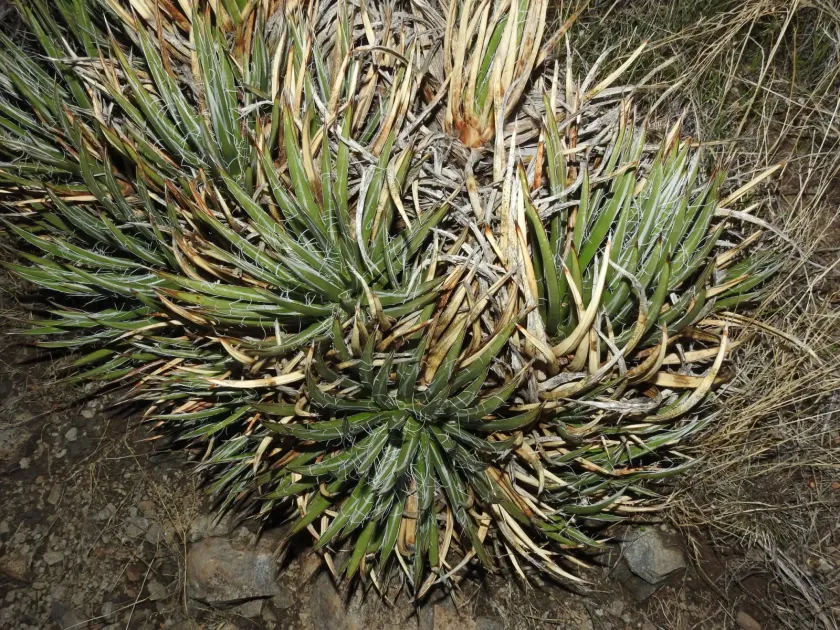
Botanically, it forms dense, compact rosettes characterized by rigid, dark green leaves that reach approximately 20 centimeters in length. A signature feature of this species is the white, curly filaments that peel from the leaf margins, providing a striking visual texture.
The cultural requirements for this plant emphasize high solar exposure. As a xerophytic plant, it thrives in environments with intense sunlight and requires a well-draining soil mix that prevents any moisture accumulation around the basal tissues.
In terms of agricultural management, the watering frequency must be kept extremely low. During the dormant period, typically the cooler winter months, the plant should remain almost entirely dry to prevent physiological stress and tissue damage.
Container cultivation is the most common method for this species outside of its natural habitat. Proper drainage and a gritty, inorganic medium are essential components of successful long-term maintenance in controlled or domestic environments.
Main diseases and pests
The primary threat to the health of Toumey agave is the development of fungal rot. This condition is almost exclusively induced by over-saturation of the substrate or inadequate airflow, which prevents the soil from drying out efficiently.
Pest pressures are largely dominated by mealybugs, which are known to colonize the tight spaces between the agave leaves. These pests are resilient and can cause significant damage by siphoning nutrients and introducing secondary viral or fungal pathogens.
Spider mites can also become problematic under conditions of low humidity. Their feeding results in visible pitting and scarring on the leaf surface, which detracts from the plant's natural ornamental quality and health.
Soil-borne pests, specifically root mealybugs, represent a hidden challenge. They often go unnoticed until the plant shows visible signs of wilting, at which point the root system may already be severely compromised by their feeding activity.
Effective management includes maintaining a dry environment, routine inspections of leaf axils, and the selective use of systemic pesticides. Keeping the crown of the plant clean and dry remains the most effective prophylactic measure against biological threats.