
Gypsum agave
Agave gypsicola
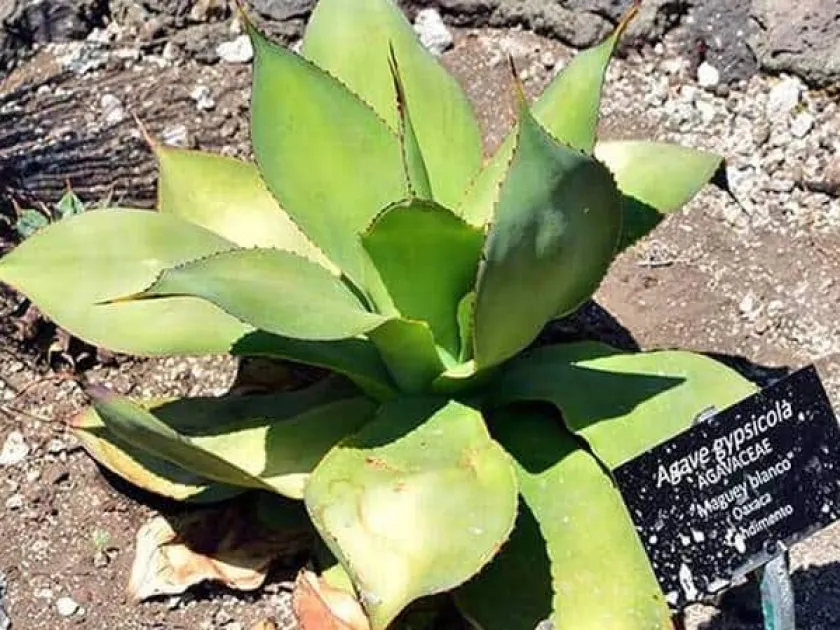
Description
Growing requirements
Gypsum agave (Agave gypsicola) is a perennial succulent plant belonging to the Asparagaceae family. This species is native to specific arid regions of Mexico, where it has evolved to thrive on unique gypsum-rich geological formations, which is the defining factor of its habitat.
From an agronomic perspective, this plant requires highly specific soil conditions. It thrives in well-draining, rocky, or mineral-heavy substrates that mimic its natural habitat. Soil aeration is critical, and the plant performs poorly in heavy, clay-based, or water-retaining mediums.
As a specialized xerophyte, the species requires intense sunlight and low humidity to maintain its structural integrity. It is highly adapted to arid environments and demonstrates extreme tolerance to heat, making it suitable for xeriscaping and drought-prone agricultural regions.
The cultivation of Agave gypsicola involves a strictly regulated irrigation cycle. During the growing season, watering should be sparing, ensuring the substrate dries out completely between waterings. During winter, the plant enters a dormant phase and should be kept almost completely dry.
Botanically, it forms a compact rosette of rigid, fleshy leaves often protected by marginal spines. Its slow growth rate and architectural beauty make it a prized specimen for specialized collections and ornamental landscapes in warm climates.
Main diseases and pests
The primary threat to the health of the gypsum agave is root rot, typically caused by poor drainage or excessive irrigation. When the substrate remains wet for extended periods, fungal pathogens quickly attack the root system, leading to systemic collapse.
Mealybugs are the most prevalent pest affecting this species. These insects tend to colonize the base of the leaves and the tight center of the rosette, where they are difficult to reach. Their presence can severely stunt growth and lead to secondary infections.
Spider mites can also become a problem in dry, poorly ventilated conditions, particularly in greenhouses. They feed on the leaf tissue, causing discoloration and surface damage, which compromises the plant's natural defense against pathogens.
Mechanical damage to the leaves should be avoided, as open wounds provide entry points for bacteria and fungi. Handling the plant requires care to preserve the integrity of the leaf cuticle, which acts as a barrier against environmental stress.
Effective pest management relies on early detection and the use of targeted systemic treatments. However, the most sustainable approach to preventing threats remains maintaining optimal moisture levels and ensuring excellent air circulation around the plants.