
Agave demeesteriana
Agave demeesteriana
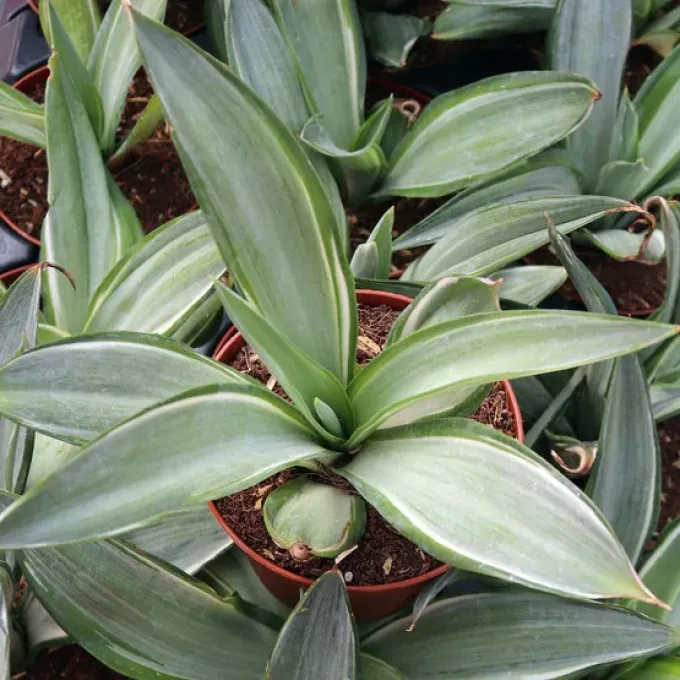
Description
Growing requirements
Agave demeesteriana belongs to the Asparagaceae family, subfamily Agavoideae. It is a perennial evergreen succulent plant characterized by a powerful leaf rosette and a relatively slow growth rate under natural conditions.
The plant originates from the arid regions of Central America, primarily Mexico. In commercial cultivation, agave requires sunny, well-drained soil where moisture stagnation is prevented, which is critical to avoid the development of root rots.
The culture prefers light, sandy, or stony substrates with a neutral or slightly acidic pH level. The plant is highly drought-tolerant, although moderate irrigation is necessary during the first years of growth to achieve optimal biomass yield.
Temperature is a key factor as the plant is heat-loving. The optimal range for active vegetation is between +20°C and +30°C. Prolonged freezing temperatures below 0°C can damage leaf tissues, limiting its cultivation to tropical and subtropical climates.
An important aspect of agronomy is maintaining proper spacing between plants, as rosettes can reach a significant diameter. Regular weed control is essential to prevent competition for nutrients during the early stages of the crop's development.
Main diseases and pests
The main threats to this culture are fungal diseases that develop under conditions of excessive soil moisture and poor root system aeration. Among these, Fusarium wilt and root rot are the most frequently encountered issues.
In terms of pests, weevils cause the most significant damage to plantations, as their larvae penetrate the core of the plant, often leading to its death. Infestations of mites and mealybugs, which weaken the plant's immune system, are also possible.
Disease prevention includes the use of healthy planting material and the creation of effective drainage systems. Chemical treatment is applied selectively, strictly following safety regulations for this specific type of plant.
Pest monitoring should be carried out throughout the entire vegetative period. If centers of infection are detected, affected parts of the plant must be immediately removed and disposed of to prevent the spread of the pathogen across the plantation.
Agronomists recommend following crop rotation practices, avoiding planting agave on plots where other succulent species susceptible to similar phytopathologies have been grown previously.
Harvesting
The economic use of Agave demeesteriana lies in the extraction of durable technical fiber, which is harvested from the leaves of the plant once they reach technical maturity.
The harvest is a labor-intensive process that requires specialized tools to separate the mature leaves from the base of the rosette. The optimal time for harvesting is when the leaves contain the highest concentration of fiber.
After cutting, the leaves undergo mechanical decortication — a process of removing the pulp to release the fiber bundles. The obtained raw material is washed and dried under natural conditions to reach a commercial state.
The yield of marketable fiber depends on the growing conditions and the age of the plants. Processing efficiency is significantly increased through the use of specialized equipment designed to minimize the loss of long fibers.
A byproduct of the processing is biomass, which can be used as organic fertilizer to restore soil fertility on the plantations, closing the nutrient cycle.