
Aeranthes henricii
Aeranthes henricii
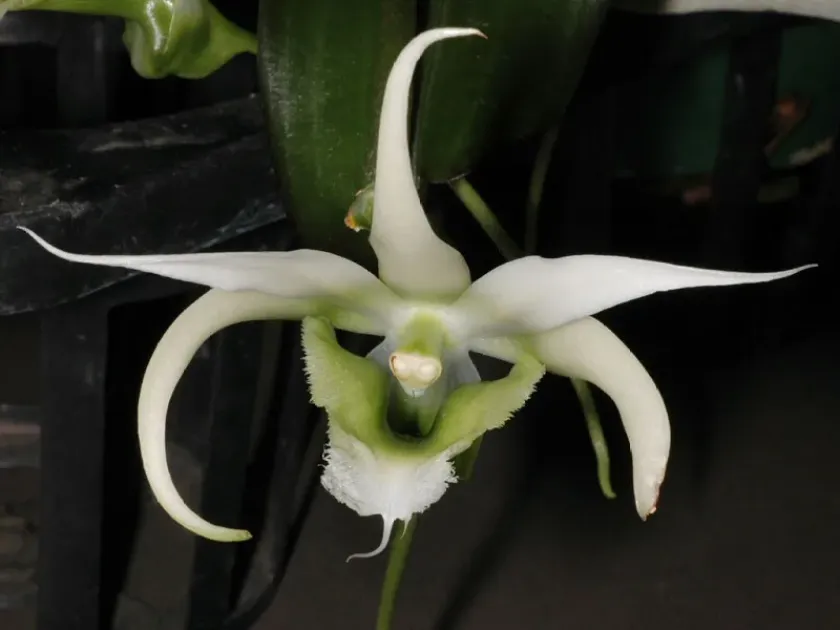
Description
Growing requirements
Aeranthes henricii is an epiphytic orchid belonging to the Orchidaceae family. Native to the humid rainforests of Madagascar, this plant typically grows attached to the bark of trees, relying on atmospheric moisture for its survival.
The species requires a highly stable climate to thrive, typically demanding temperatures between 18°C and 25°C. Rapid temperature fluctuations should be avoided, as the plant is sensitive to environmental stress which can halt its growth cycles.
Maintaining high humidity levels, ideally between 70% and 80%, is essential for this culture. Proper air circulation must be provided to ensure that moisture does not stagnate, which is a common cause of plant failure in artificial environments.
Cultivation should exclusively occur on mounts such as cork bark or wood slabs to allow for rapid drainage and optimal aeration of the roots. Traditional potting media are strictly unsuitable as they lead to root suffocation and decay.
Light requirements for Aeranthes henricii involve bright, indirect exposure. Direct sunlight can cause severe leaf scorch, while low light conditions inhibit the development of the characteristic long-lasting inflorescences that the species is known for.
Main diseases and pests
The most significant threats to Aeranthes henricii include fungal and bacterial infections triggered by poor ventilation and excessive moisture accumulation. These pathogens can rapidly infect the crown and roots, leading to irreversible tissue necrosis.
Pests such as mealybugs, scale insects, and spider mites represent a constant danger to this orchid. These pests feed on the plant's sap and thrive in environments where humidity levels are not strictly managed or where air movement is stagnant.
Proper sanitation practices, including the sterilization of tools and the isolation of new arrivals, are critical to prevent the spread of diseases. Frequent inspection of the root system and leaf undersides is recommended for early detection of pest infestations.
Chemical sensitivity is a key biological feature of this orchid, meaning that aggressive pesticides can cause more damage than the pests themselves. Growers should prioritize the use of systemic fungicides and insecticides specifically formulated for delicate orchid species.
In cases of severe infestation, mechanical removal of pests combined with biological control agents is often preferred. Keeping the plant in a clean, well-ventilated space with optimal humidity is the most effective long-term strategy for preventing disease outbreaks.