
River mangrove
Aegiceras corniculatum
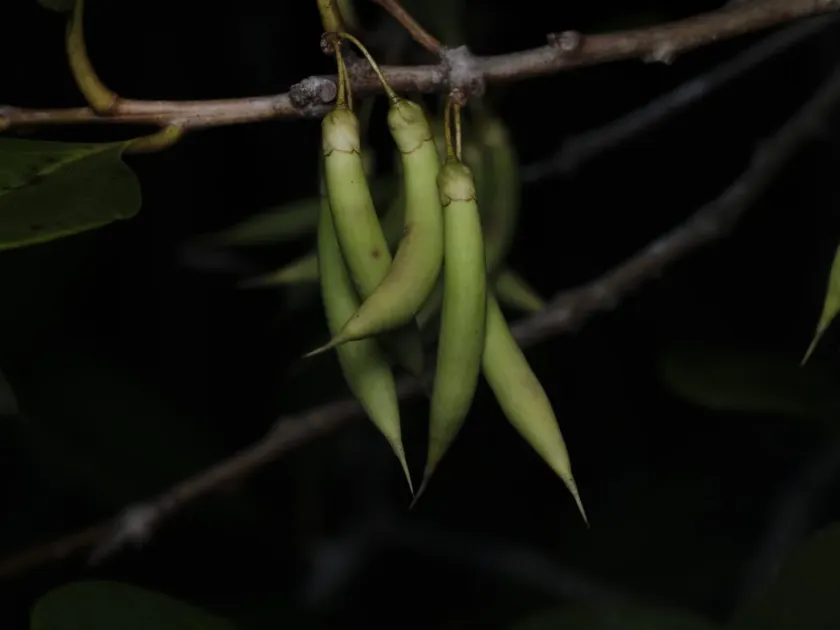
Description
Growing requirements
The river mangrove (Aegiceras corniculatum) is a distinct species within the Primulaceae family. It is a vital component of tropical and subtropical mangrove ecosystems, thriving in saline environments that are regularly flooded by the tide.
Native to the Indo-Pacific region, this plant is found along the coasts of Australia, India, and Southeast Asia. It serves as a biological buffer, protecting shorelines from tidal damage and acting as a carbon sink within its habitat.
This species is highly adapted to saline conditions. It possesses specialized salt-secreting glands on its leaves, which allow it to excrete excess salt and maintain osmotic balance. This makes it an ideal candidate for research into salt tolerance in crops.
River mangroves require nutrient-rich, muddy soils and a stable, warm climate to flourish. The root system is specifically adapted to facilitate oxygen absorption from the air, enabling the plant to survive in waterlogged, anaerobic mudflats.
From a utility perspective, the species is highly valued in apiculture for its nectar-rich flowers. Additionally, its resilient wood is often used locally for small-scale timber production and as a traditional source of fuel due to its durability.
Main diseases and pests
The primary threats to Aegiceras corniculatum include the destruction of mangrove forests for industrial development and shrimp farming. The conversion of land leads to the loss of critical nursery habitats for various marine species.
Pests such as certain defoliating insects can cause significant damage to the foliage, especially during periods of environmental stress. Frequent outbreaks can lead to stunted growth and reduced seed production.
Fungal pathogens represent a constant threat, particularly in environments with poor circulation and high humidity. These infections can compromise the root system's ability to supply nutrients to the rest of the plant.
Pollution from agricultural runoff, including fertilizers and herbicides, poses a significant risk to the plant's delicate physiological processes. Chemical contamination can interfere with nutrient uptake and reproductive health.
Rising sea levels and changing tidal patterns threaten to submerge existing habitats, limiting the species' ability to naturally propagate. Conservation efforts focus on restoring degraded areas and protecting existing mangroves from further degradation.