
Albany woollybush
Adenanthos sericeus Labill.
Description
Growing requirements
Adenanthos sericeus, commonly known as the Albany woollybush, is a distinctive evergreen shrub belonging to the Proteaceae family. It is native to the coastal regions of Western Australia, where it thrives in sandy, well-draining soils and Mediterranean climates.
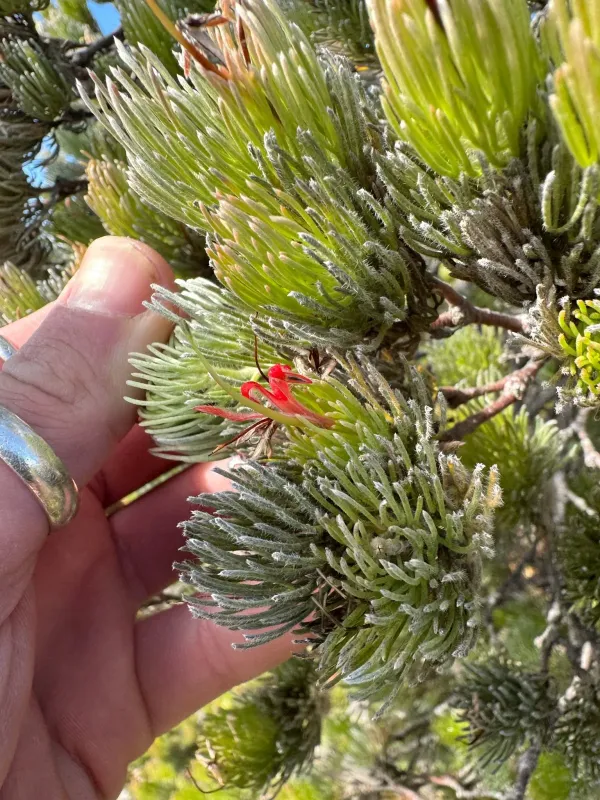
The plant is highly regarded for its finely divided, feathery foliage that is covered in fine, silvery hairs, giving it a soft, woolly appearance. This aesthetic quality has made it a popular choice for ornamental gardens and landscape design.
When cultivating the woollybush, it is essential to provide full sun exposure. The plant requires excellent drainage; any accumulation of water around the roots can be fatal. It does not tolerate heavy, waterlogged clay soils.
One of the most important aspects of its agronomy is the sensitivity to phosphorus. Like many Proteaceae, Adenanthos sericeus has evolved to survive in low-nutrient soils and can be harmed by standard fertilizers; low-phosphorus or native-specific fertilizers are required.
The plant is hardy but prefers temperate conditions. In regions with freezing winters, it is typically grown in containers, allowing for it to be moved indoors or protected during extreme temperatures to maintain its vigor.
Main diseases and pests
Root rot caused by Phytophthora species is the most significant threat to the Albany woollybush. Once the root system is compromised by these water-mold pathogens, recovery is rarely possible, necessitating strict drainage control.
Insect pests such as aphids and scale insects are common in garden settings. These pests feed on the nutrient-rich sap of the tender new growth, which can lead to stunted development and the secondary growth of sooty mold.
Spider mites can become a problematic pest in dry, indoor environments or greenhouses. Regular monitoring of the foliage and misting can help prevent infestations before they cause significant damage to the fine leaves.
Over-fertilization represents a major cultural risk. Excess nitrogen encourages succulent growth that is more susceptible to both mechanical damage and pest attacks, while excessive phosphorus is directly toxic to the root hairs.
To ensure long-term health, growers must prioritize soil aeration and avoid over-watering. If the plant shows signs of chlorosis or wilting, it is often an indicator of either soil toxicity or root disease caused by drainage failure.