
Acanthophippium bicolor
Acanthophippium bicolor
Description
Growing requirements
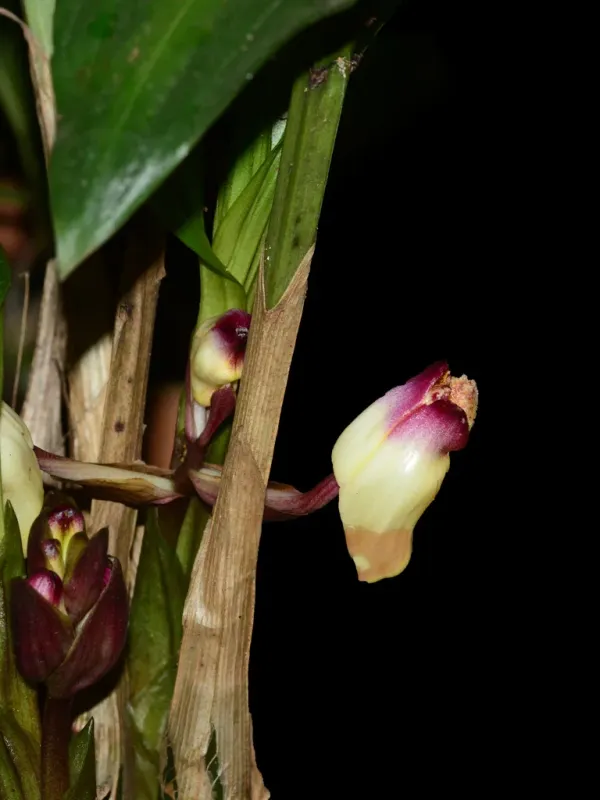
Acanthophippium bicolor is an intriguing member of the Orchidaceae family, natively inhabiting the humid tropical forests of South and Southeast Asia. As a terrestrial sympodial orchid, it is highly valued by collectors for its unique morphological features.
The plant is distinguished by its barrel-shaped pseudobulbs and large, plicate leaves. During its flowering phase, it produces fleshy, lantern-like flowers that are remarkably attractive and add significant ornamental value to any specialized collection.
Regarding climate requirements, this species demands consistently warm temperatures and high relative humidity. It does not tolerate cold drafts or sudden thermal drops, making it unsuitable for outdoor cultivation in temperate regions, requiring a controlled greenhouse environment.
The substrate must provide an excellent balance between water retention and aeration. A mixture consisting of fir bark, sphagnum moss, and perlite is generally recommended to ensure the roots receive adequate oxygen while remaining moist enough for healthy growth.
Proper agro-technical practices involve a clear division between the active growth season and the dormancy period. Irrigation should be generous when new pseudobulbs are developing, but significantly reduced after the growth matures to prevent root rot and physiological stress.
Main diseases and pests
The primary threats to Acanthophippium bicolor are fungal infections and bacterial rots, which often occur when the substrate is too dense or when the drainage system is inadequate, leading to water stagnation around the roots.
Common pests include spider mites and mealybugs. These pests thrive in indoor environments with low humidity, causing damage to the leaves and weakening the overall health of the plant if left untreated during the early stages of infestation.
To maintain a healthy crop, growers must implement a strict integrated pest management (IPM) strategy. This involves the application of appropriate acaricides and insecticides, alongside rigorous monitoring of the plant's health.
Cultural hygiene is critical: ensuring proper air circulation within the greenhouse reduces the likelihood of fungal outbreaks. Additionally, tools used for pruning should be sterilized between each use to prevent the transmission of pathogens between healthy plants.
Finally, avoid over-fertilization, as high concentrations of salts in the substrate can lead to root burning, making the plant more susceptible to opportunistic infections and significantly reducing the vitality of the pseudobulbs.