
Acanthocereus tetragonus
Acanthocereus tetragonus
Description
Growing requirements
Acanthocereus tetragonus, often known as the barbed-wire cactus, belongs to the Cactaceae family. It is a sprawling, columnar cactus native to the tropical regions of the Americas, where it has historically been utilized by local populations for both ornamental and food purposes.
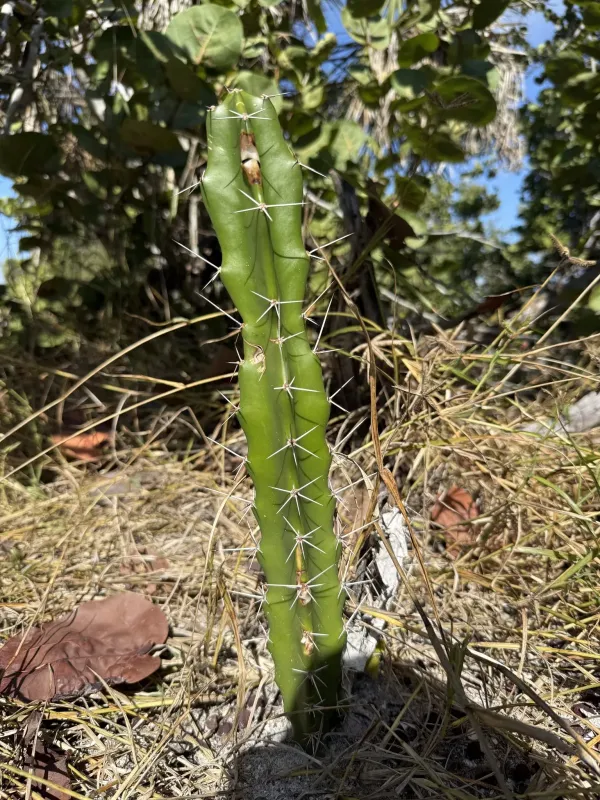
The botanical structure of this plant is characterized by its distinct, segmented stems with four longitudinal ribs, which provide structural support. These stems can grow to significant lengths, allowing the plant to climb or sprawl over various surfaces in its native habitat.
Agricultural success depends on providing optimal sun exposure, as this species thrives in full sun conditions. Unlike many other crops, it is highly drought-tolerant, but to maximize fruit production, regular irrigation during the growing season is recommended provided the drainage is excellent.
The soil requirements for this cactus focus on aeration and drainage. It performs best in sandy, rocky, or well-draining potting mixtures that prevent the accumulation of excess water around the roots, as the species is highly susceptible to root rot in waterlogged conditions.
In addition to its culinary uses for its edible fruit, which resembles other pitaya species, the plant is highly valued for its hardiness in warm climates. It serves as an effective natural barrier in agriculture due to the sharp spines that protect the succulent green stems.
Main diseases and pests
The primary threats to the health of the plant include fungal pathogens such as Fusarium and various types of soft rot that thrive in high humidity. Proper field sanitation and avoiding overhead irrigation are essential practices to minimize the spread of these diseases.
Pest management should focus on monitoring for sap-sucking insects such as mealybugs and scale. These pests can rapidly proliferate in the crevices of the ribs, causing tissue damage and providing entry points for secondary bacterial infections that can permanently damage the stem.