
Acampe ochracea
Acampe ochracea
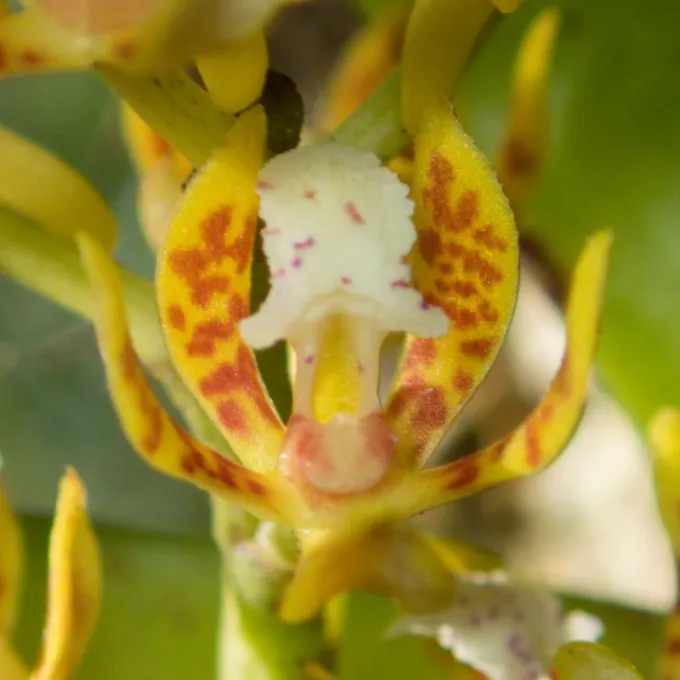
Description
Growing requirements
Acampe ochracea is an epiphytic orchid species belonging to the Orchidaceae family. It is characterized by its monopodial growth habit, where the stem continues to elongate over several years, producing thick, leathery leaves arranged in two rows along the stem.
This species is native to the tropical forests of South and Southeast Asia, including India and Myanmar. In its natural habitat, it thrives in warm, humid environments where it grows attached to tree branches, utilizing high levels of atmospheric moisture and debris for nutrients.
Cultivating Acampe ochracea requires a well-draining medium, such as a mix of orchid bark, charcoal, and perlite, to ensure proper airflow around the roots. Containers should be chosen to mimic its epiphytic nature, often utilizing hanging baskets or wooden mounts.
The climate requirements include a consistent temperature range between 18°C and 28°C throughout the year. While it needs bright, indirect light to prosper, protecting the plant from intense midday sunlight is crucial to prevent leaf scorching and dehydration.
Watering practices should be adjusted according to the season, with more frequent hydration during the active growth period. Proper air movement is essential to prevent moisture buildup in the leaf axils, which can be detrimental to the plant's health.
Main diseases and pests
The most significant threat to Acampe ochracea is the development of root and stem rot caused by water stagnation. Overwatering or using a medium that retains too much moisture for too long creates ideal conditions for pathogenic fungi.
Pests such as scale insects and mealybugs frequently target this species, hiding in the junctions between leaves and the main stem. Integrated pest management, including regular inspection and the use of insecticidal soaps, is recommended for control.
Spider mites can become a problem if the ambient humidity levels fall too low for an extended period. Maintaining a humidity level of at least 60% acts as a natural deterrent and supports the overall health of the tropical foliage.
Bacterial soft rot can spread rapidly if the plant is kept in cool, damp conditions without adequate ventilation. If symptoms appear, the affected areas must be removed immediately, and the plant should be treated with appropriate bactericides.
Improper sanitation during pruning or maintenance can lead to viral infections, which manifest as mottled leaves or stunted growth. Always ensure that all cutting tools are sterilized with alcohol or flame before and between uses on different plants.