
Japanese Zelkova
Zelkova serrata (Thunb.) Makino
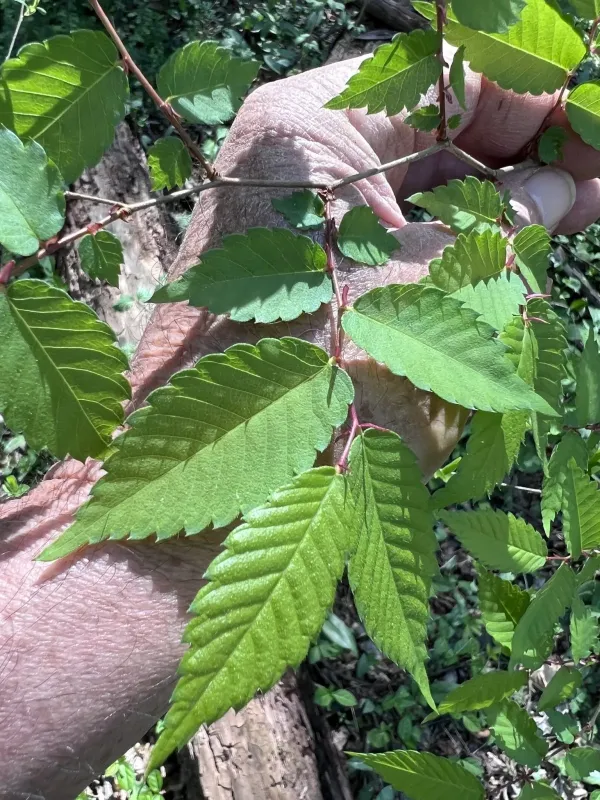
Description
Growing requirements
The Japanese Zelkova (Zelkova serrata) is a prominent member of the Ulmaceae family. It is a deciduous tree widely admired for its graceful vase-like shape, symmetrical branching, and exfoliating bark that reveals attractive orange-brown inner layers.
Native to Japan, Korea, and Eastern China, the tree thrives in deep, fertile, and well-drained soils. While it prefers slightly acidic to neutral soil, it is remarkably adaptable to various soil types once established in the landscape.
Regarding climate, the Japanese Zelkova requires full sun to partial shade. It is considered moderately hardy, generally suited for USDA zones 5 through 8, though it performs best in regions with distinct seasonal transitions.
The wood of the Japanese Zelkova is highly prized for its strength, durability, and beautiful grain. It is extensively used in high-quality furniture making, cabinetry, and is considered one of the finest woods for traditional Japanese woodwork.
In landscaping, it serves as an excellent shade tree for streets and parks. Because of its manageable size and leaf structure, it is also a popular choice for bonsai enthusiasts seeking to create miniature versions of this elegant species.
Main diseases and pests
One of the primary biological threats to the species is the Dutch Elm Disease. Although Zelkova serrata is generally more resistant than many Ulmus species, it can still be susceptible under stress, making site selection critical.
Leaf spot diseases can occur during prolonged periods of high humidity and rainfall. Proper spacing between trees is essential to ensure good air circulation and to reduce the incidence of such infections.
Scale insects and aphids are common pests that may infest the bark and leaves. These pests can be managed through natural predators or appropriate horticultural oils applied during the dormant season.
Root rot is a significant risk if the tree is planted in heavy, waterlogged clay soils. Ensuring adequate drainage during the planting phase is the most effective preventative measure against soil-borne pathogens.
Mechanical damage to the bark must be avoided, as open wounds serve as entry points for various boring insects. Protective measures during landscaping maintenance around the base of the tree are highly recommended.