
Adansonia za
Adansonia za Baill.
Description
Growing requirements
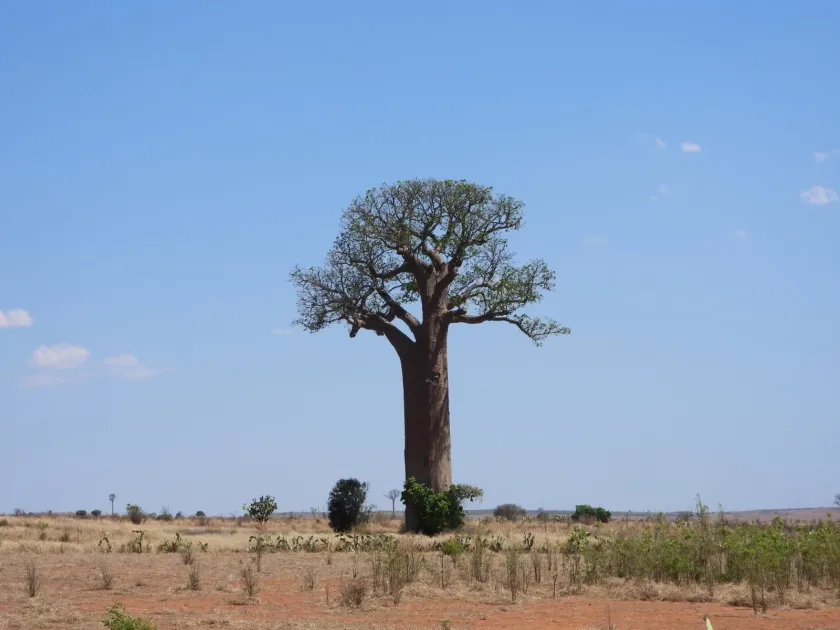
Adansonia za is a species of tree in the family Malvaceae, native to Madagascar. It is a distinct succulent tree characterized by its massive, bottle-shaped trunk which functions as a critical water storage system for survival.
The tree thrives in tropical climates characterized by a marked dry season. It is highly sensitive to cold and cannot tolerate frost, making it suitable for open-field cultivation only in specific tropical latitudes.
Soil requirements are strict regarding drainage. Adansonia za prefers well-drained, sandy or gravelly soils. It cannot withstand waterlogged conditions, which are the leading cause of root rot in agricultural settings.
Botanically, the tree is known for its greyish bark and deciduous habit. During the dry season, the trees lose their leaves to reduce water loss through transpiration, maintaining a skeletal appearance until the rains return.
Agrotechnical management requires full sun exposure. In nursery or cultivation environments, adequate spacing is necessary to allow for the massive root development typical of the genus Adansonia.
Yield
The fruit of Adansonia za is an important local resource. The pulp inside the woody capsule is edible and consumed by local communities for its high nutrient content, specifically vitamins and minerals.
The bark is harvested for its strong, fibrous tissues. These fibers are traditionally processed to create ropes, mats, and fishing nets, serving as a sustainable material for local craftsmanship.
Seeds are valued for the oils extracted from them, which find niche applications in local cosmetic and traditional medicinal practices, supporting the economic value of the species.
In some regions, the young leaves of the tree are utilized as a vegetable component. They are processed into dishes that provide essential dietary variety during the lean seasons of the year.
Furthermore, Adansonia za serves as a keystone species in agroforestry, providing shade, helping to improve soil structure, and contributing to the overall stability of the local ecosystem.
Main diseases and pests
Root rot is the most significant threat to cultivated Adansonia za. It is predominantly caused by fungal pathogens when the soil remains too wet for extended periods, preventing the roots from breathing.
Insects such as wood-boring beetles can pose a threat to mature trees. These pests penetrate the soft inner bark, causing structural damage that weakens the tree and makes it susceptible to secondary infections.
Pests such as mites and aphids may attack younger leaves, especially in greenhouse conditions where natural predators are absent. Regular monitoring is required to maintain plant health.
Environmental degradation and habitat loss on Madagascar are the most severe external threats to the species. Efforts to preserve wild populations are critical for maintaining the biodiversity of the region.
Excessive fertilizer application can sometimes lead to imbalanced growth, making the tree more susceptible to physiological disorders. A balanced approach using slow-release organic nutrients is recommended.