
Adansonia rubrostipa
Adansonia rubrostipa Jum. & H. Perrier
Description
Growing requirements
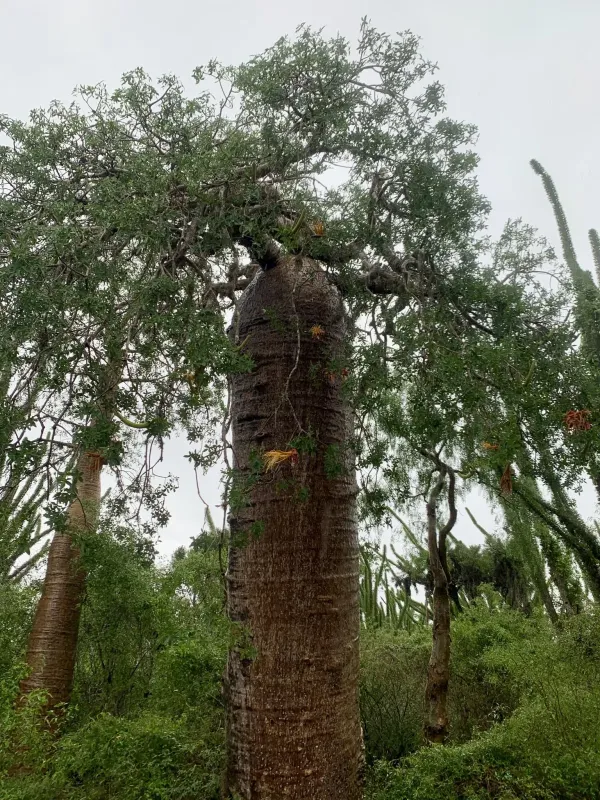
Adansonia rubrostipa, commonly known as the Fony Baobab, belongs to the Malvaceae family. It is a succulent tree endemic to the dry deciduous forests of western Madagascar, recognized for its unique, slender, bottle-shaped trunk that acts as a vital water reservoir.
The tree is characterized by its distinctive reddish-brown bark and palmate leaves, which are typically shed during the prolonged dry season to conserve moisture. It is a slow-growing species that can reach significant heights, standing out in the arid landscapes of its habitat.
Regarding climate, the Fony Baobab requires warm tropical temperatures and cannot tolerate frost. It thrives in regions with intense solar radiation, which supports its physiological adaptation to survival in extreme drought conditions where other vegetation might fail.
Soil requirements for this species include high drainage capacity. It naturally grows in sandy or rocky soils, meaning that in any cultivation attempt, waterlogging must be strictly avoided, as the root system is highly susceptible to fungal infections in wet, heavy substrates.
Propagation is generally performed via seeds, which possess a thick, dormant coat. Successful germination typically requires mechanical or chemical scarification to break dormancy and ensure water uptake before planting in a warm, sterile medium.
Harvesting
The economic utility of the tree is primarily localized. The fruit pulp is edible and nutritious, often consumed by local populations. Its high content of antioxidants and vitamins makes it a valuable food source in the challenging environments of Madagascar.
In addition to food, the bark fibers are utilized for cordage and weaving traditional textiles. Given its conservation status, the species is increasingly valued for botanical study and biodiversity protection efforts rather than commercial exploitation.