
Yucca valida
Yucca valida
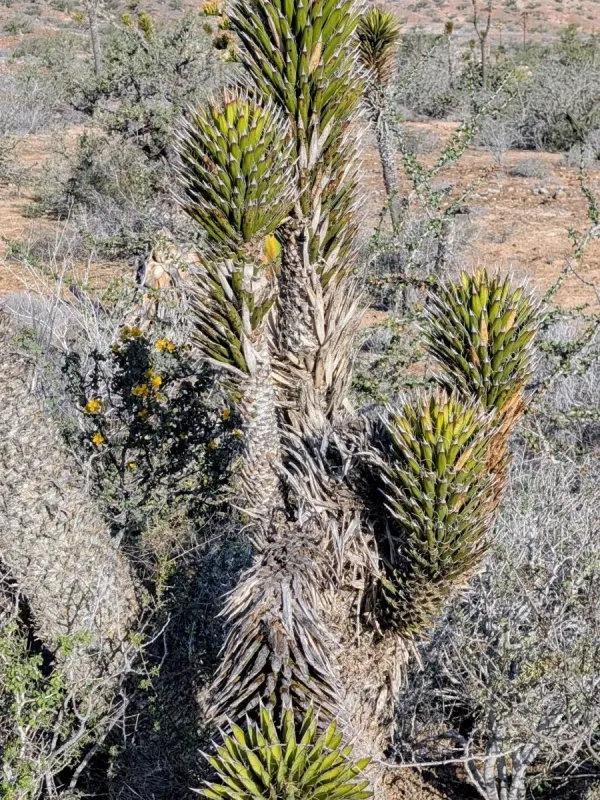
Description
Sowing dates
Yucca valida is a striking arborescent succulent belonging to the Asparagaceae family. Native to the arid landscapes of Baja California, this species is increasingly recognized for its resilience and potential in specialized agricultural settings.
Propagation is typically achieved through seeds or vegetative offsets. For seed sowing, a well-draining, sandy medium is essential. Seeds should be sown at a shallow depth to ensure proper germination under controlled temperatures.
The germination phase requires consistent warmth, ideally between 20 and 25 degrees Celsius. Providing a stable, slightly humid environment during the initial weeks is crucial for the development of healthy seedlings before they are transplanted to drier conditions.
Vegetative propagation involves harvesting lateral shoots or rhizome cuttings. This method is often preferred in commercial farming as it produces genetically identical specimens and ensures a more uniform growth rate across the plantation.
After transplanting, young plants require a period of hardening off. Gradually exposing them to direct sunlight and reduced irrigation helps them develop the necessary drought tolerance to thrive in permanent outdoor conditions.
Growing requirements
Yucca valida thrives in full sun exposure. It is highly adapted to high-intensity light environments, which are essential for maintaining the plant's structural integrity and stimulating the production of high-quality fiber.
The soil requirements are strict: excellent drainage is non-negotiable. The plant is prone to root rot if grown in heavy or waterlogged soils, so sandy or rocky substrates are considered optimal for its cultivation.
Climatic requirements revolve around arid conditions. While the plant can withstand extreme summer heat, it is sensitive to prolonged periods of high humidity combined with low temperatures, which can prove fatal to the roots.
Minimal irrigation is required once the plant is established. It utilizes its succulent tissues to store water, making it a highly efficient crop in regions where water resources are limited or expensive.
Adequate spacing between plants is recommended to ensure good air circulation. This prevents the buildup of excess humidity within the foliage, which is a common precursor to bacterial and fungal issues.
Yield
The primary economic output of Yucca valida is its robust fibrous material. The leaves are harvested sustainably, allowing the plant to regenerate over several seasons, which makes it a long-term productive asset.
In addition to industrial fiber, the plant is highly valued for ornamental and landscape architectural applications. Its architectural form makes it a sought-after species for xeriscaping projects in dry climate zones.
Harvesting efficiency is optimized by selecting mature leaves that have reached their full length and thickness. Mechanical extraction methods are typically employed to separate the fiber from the succulent leaf tissue.
The yield of biomass per hectare is relatively stable provided the plants receive sufficient sun and protection from extreme frost. Controlled feeding with micronutrients can enhance foliage density without compromising the plant's natural drought resistance.
Market demand for sustainable, natural fibers has brought renewed interest in the cultivation of species like Yucca valida, positioning it as a niche but valuable crop in arid agricultural development.
Main diseases and pests
The most significant threat to Yucca valida is root rot caused by pathogens like Phytophthora. Overwatering is the leading cause of such infections, highlighting the importance of soil drainage management.
Common pests include scale insects and spider mites, which can infest the dense leaf bases. If left unchecked, these pests can severely stunt growth and reduce the quality of the harvested fibers.
Fungal leaf spot diseases may appear during seasons of unusual rainfall. These spots not only affect the plant's appearance but can also weaken the overall structural strength of the leaves, lowering commercial value.
Integrated pest management (IPM) is the most effective approach for protecting plantations. This includes the use of biological controls where possible and targeted application of systemic insecticides when infestations are detected.
Regular sanitation, including the removal of dead or decaying lower leaves, helps to eliminate potential breeding grounds for pests and pathogens, keeping the plantation healthy and productive.