
Rigid Yucca
Yucca rigida
Description
Sowing dates
Propagation of Yucca rigida in professional nurseries is typically conducted through seeds or by utilizing basal offshoots. Seeds should be sown into a well-draining, sandy-based substrate during early spring when day length begins to increase, stimulating germination processes.
Successful germination requires scarification of the seeds and maintaining a stable temperature between 20–25 degrees Celsius. Sowing is performed in seedling trays at a depth of 1–2 centimeters, ensuring sufficient oxygen access for the developing embryo.
Seedlings emerge unevenly over 3 to 6 weeks, necessitating careful irrigation to prevent root rot. Transplanting seedlings into individual containers is recommended once they reach the two-leaf stage, typically occurring within 2–3 months post-sowing.
Transplanting hardened seedlings to open ground or permanent sites must be delayed until all risks of frost have passed. Yucca rigida exhibits a very slow growth rate during the juvenile phase, requiring consistent protection from weeds and competing vegetation.
Vegetative propagation involves separating offshoots from the mother plant during the dormant period or early spring. It is critical to treat any cuts with fungicides or crushed charcoal to prevent bacterial colonization before potting the new offsets.
Growing requirements
Yucca rigida, a member of the Asparagaceae family, is endemic to the arid regions of northern Mexico. This plant is highly adapted to extreme drought conditions, making full sun exposure the most fundamental requirement for healthy growth throughout the year.
The soil profile must provide perfect drainage, as waterlogged conditions in the root zone are the primary cause of plant failure. Ideal media include rocky, sandy, or loamy soils with a neutral to slightly alkaline pH level.
While the plant prefers warm to hot summer temperatures, it possesses moderate cold hardiness, capable of withstanding brief drops to -10 degrees Celsius, provided the soil remains completely dry. Humid climates are generally unsuitable for outdoor cultivation.
Irrigation must be strictly managed; even during the active growth phase, the soil must be allowed to dry out entirely between watering sessions. Excessive moisture combined with low temperatures is catastrophic for the leaf rosettes and roots.
Agrotechnical maintenance includes minimal fertilization applied only during peak growth, no more than once monthly. Use balanced mineral fertilizers specifically designed for succulents, ensuring low nitrogen levels to prevent overly succulent, weak tissue development.
Yield
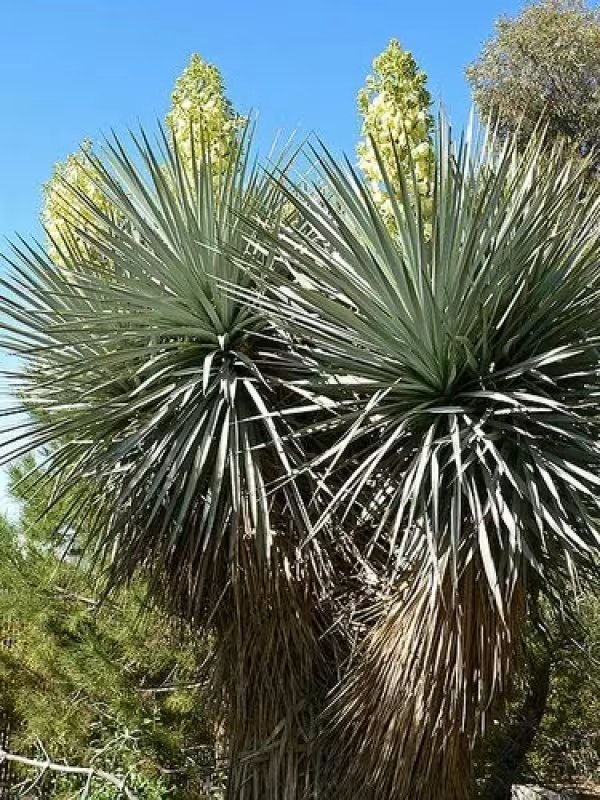
The economic value of Yucca rigida is primarily decorative and landscape-oriented, where the plant's architectural geometry is its main asset. Mature specimens are prized for the symmetry of their silver-blue, stiff leaves.
Due to the extremely slow growth rate, the plant reaches a marketable size only after several years of professional care. In commercial nurseries, success is measured by the production of standard-sized, well-rooted specimens ready for transplanting.
Flowering in cultivation is rare and reserved for well-established, mature specimens. The appearance of a tall inflorescence with creamy-white bell-shaped flowers serves as an indicator of high-quality environmental management.
The species displays high resilience to harsh abiotic factors, significantly reducing long-term maintenance costs. In arid climate zones, Yucca rigida is recognized as a low-input, sustainable choice for public space landscaping.
Seed collection is only possible under specific conditions that mimic natural habitats; therefore, large-scale commercial seed production is uncommon. Most revenue is generated through the sale of high-quality containerized nursery stock.
Main diseases and pests
The primary pathogens affecting Yucca rigida are fungal diseases, such as root rot and Fusarium wilt, triggered by soil moisture excess. If rot is detected, infected sections must be surgically removed, followed by the application of systemic fungicides.
Among pests, sucking insects pose the greatest threat, particularly mealybugs and spider mites. These pests thrive in dry air conditions often found when plants are housed in indoor greenhouses or poorly ventilated areas.
Pest control is most effective using broad-spectrum insecto-acaricides. Regular visual inspections of the leaf base and the growth center are essential, as these are the primary sites where pest colonies congregate and thrive.
Inadequate ventilation in greenhouses can lead to Grey Mold (Botrytis), which manifests as grey spots covered in fuzzy mycelium on the leaves. Effective prevention focuses on maintaining low humidity around the plant rosettes.
Bacterial infections can penetrate the plant tissues through mechanical injuries; therefore, all pruning or trimming operations must be conducted with sterilized tools during dry weather conditions to ensure rapid callus formation.