
Yucca potosina
Yucca potosina
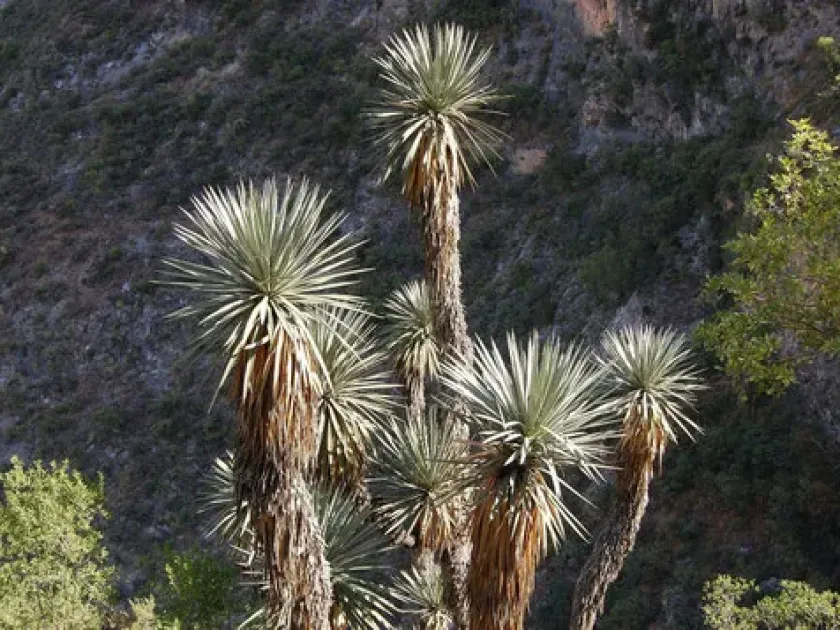
Description
Sowing dates
Yucca potosina belongs to the Asparagaceae family. In agricultural practice, this crop is typically propagated either through seeds or via vegetative methods using offshoots from the base of the parent plant.
Seeds are sown in a prepared substrate in late winter or early spring, maintaining an ambient temperature of +20°C to +25°C. Good soil aeration and controlled moisture are vital to prevent seed rot during the germination phase.
Vegetative propagation involves separating healthy suckers during the dormancy period. This approach is highly efficient for establishing uniform plantations and shortening the time required to reach the harvesting stage.
Seedlings usually require 1–2 years in nursery conditions before being transplanted to the main field. Proper spacing is critical to ensure that each plant has enough room to develop a robust root system and reach maturity.
Since the initial growth rate of Yucca potosina is relatively slow, professional weed management during the establishment phase is essential to prevent competition for nutrients and space.
Growing requirements
Originating from the arid regions of Mexico, Yucca potosina is a highly xerophytic plant. It is exceptionally well-adapted to extreme environmental conditions, including prolonged drought and high solar radiation.
The ideal soil for this crop is well-draining, sandy, or stony terrain with a neutral to slightly alkaline pH. Waterlogged soil must be avoided at all costs, as it rapidly leads to root rot and plant decline.
Full sun exposure is a non-negotiable requirement for optimal development. Adequate light intensity is directly linked to the quality and tensile strength of the fiber produced within the plant leaves.
The plant performs best at temperatures ranging from +25°C to +35°C. While established plants show remarkable resilience, commercial plantations should be sited in areas that avoid prolonged severe frost to ensure maximum fiber quality.
Fertilization should be handled with caution, favoring moderate applications of potassium and phosphorus to enhance structural tissue strength rather than encouraging excessive, weak vegetative growth.
Yield
The primary economic value of Yucca potosina lies in the high-quality, durable fibers extracted from its leaves. Yield is determined by the density of the planting, the maturity of the plants, and the quality of field management.
Harvesting typically begins when the plant reaches maturity, which generally takes between 3 to 5 years. Leaves are harvested using specific techniques that preserve the apical meristem to allow for continuous production.
Advanced decortication machinery is employed to separate the fiber from the pulp. High recovery rates are achievable when the harvesting timing aligns with the period of peak fiber development.
The multi-year nature of this crop makes it a sustainable choice for fiber production, significantly reducing the costs associated with annual soil preparation and replanting cycles.
Profitability is largely driven by the efficiency of on-site processing, which transforms raw leaves into high-grade fiber bundles ready for industrial textile or paper production.
Main diseases and pests
Fungal pathogens associated with excessive moisture, such as root rot and leaf spot, are the primary threats to this crop. Proper water management and ensuring adequate air circulation are the best preventative measures.
Pests like spider mites and mealybugs can cause significant damage by feeding on young leaf tissues. These pests can weaken the plant and negatively impact the quality of the fiber bundles harvested later.
Weevils can also pose a risk by boring into the core of the plant, which may compromise structural integrity and increase susceptibility to secondary bacterial infections.
Integrated pest management, including regular scouting and the use of targeted systemic insecticides when necessary, helps maintain the health of the plantation.
- Fusarium wilt
- Anthracnose leaf spot
- Spider mites
- Root decay (bacterial or fungal)
Harvesting
Harvesting Yucca potosina requires specialized manual or semi-automated tools to selectively prune the outer leaves while ensuring the central growth point remains completely intact.
Once cut, leaves should be processed immediately. Prolonged exposure to heat and moisture in the field can trigger decomposition, which drastically reduces the tensile strength and quality of the fiber.
The primary processing phase, decortication, removes the non-fibrous pulp. This pulp can often be collected and recycled as organic soil amendments for the plantation itself.
After extraction, the fibers undergo a drying process where environmental conditions are strictly monitored to prevent discoloration and ensure consistent product quality for the end market.
Efficiency in the harvest chain is critical for commercial success, ensuring that the plantation maintains its productive capacity over several decades without the need for total regeneration.