
Yucca necopina
Yucca necopina
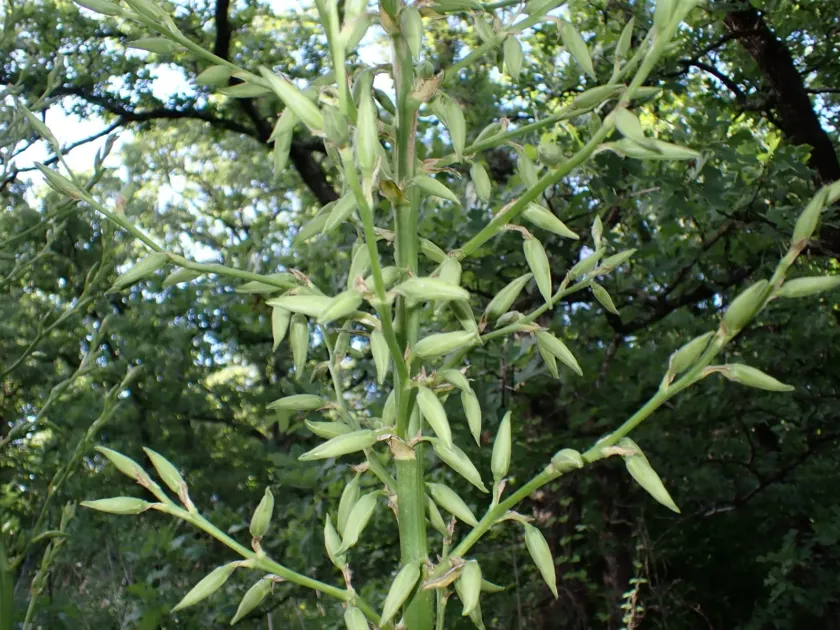
Description
Growing requirements
Yucca necopina is a distinct perennial species belonging to the Asparagaceae family. Native to the sandy prairies and open slopes of North America, this plant has evolved to thrive in harsh, nutrient-poor environments where water retention is essential for long-term survival.
Botanically, the plant is characterized by a dense rosette of rigid, sword-like leaves that are typically grey-green. These leaves are adapted to store moisture, and the plant maintains a sturdy, deep root system to access deep water sources in dry soil conditions.
Cultural requirements emphasize the need for full sun exposure. It is imperative to plant this species in areas where it receives at least six to eight hours of direct sunlight daily to ensure strong leaf development and maintain the overall health of the specimen.
The soil must be exceptionally well-draining, such as sandy or rocky substrates. Heavy soils prone to compaction or water retention are highly detrimental to the roots, often leading to rapid decline. If native soil is heavy, amendments like coarse sand or gravel are necessary.
Climate adaptability is a hallmark of this species, as it is well-suited for regions experiencing hot, dry summers. It exhibits significant tolerance to temperature fluctuations, provided that the growing medium remains relatively dry during the winter dormancy period.
Main diseases and pests
The primary threats to Yucca necopina are moisture-related pathogens, particularly fungal root rot. Excessive irrigation or standing water around the base of the plant creates an ideal environment for pathogenic fungi that can destroy the root system quickly.
Insect pests include spider mites and scale insects. These pests often congregate on the undersides of the rigid leaves or in the crevices of the rosette, depleting the plant's resources and causing localized chlorosis or stunted leaf development.
Mechanical control involves inspecting the leaves and wiping them down to remove visible scale clusters. In severe cases, systemic insecticides or horticultural oils may be used to manage infestations effectively without damaging the waxy cuticle of the leaves.
Prevention is centered on maintaining excellent air circulation around the rosettes. Keeping the foliage dry and preventing soil waterlogging are the most effective strategies for preventing the onset of common bacterial and fungal diseases.
Monitoring the plant for signs of stress, such as yellowing leaf bases or softened tissue, is recommended. Early intervention with appropriate fungicides can prevent a localized issue from compromising the structural integrity of the entire plant.