
Yucca lacandonica
Yucca lacandonica
Description
Growing requirements
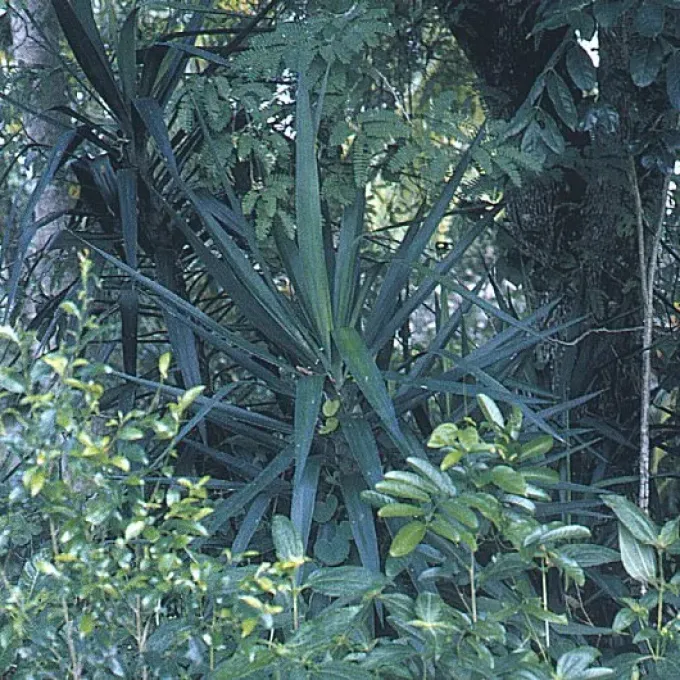
Yucca lacandonica is an evergreen perennial plant belonging to the Agavaceae family. Native to the tropical regions of Mexico, specifically the state of Chiapas, this species is well-adapted to specific forest edge environments where it exhibits a robust, woody growth pattern.
The botanical structure of the plant includes a prominent trunk and rigid, sword-shaped leaves arranged in dense basal rosettes. Unlike some desert-dwelling yuccas, this species often thrives in partially shaded environments, making it unique within its genus for tropical understory adaptation.
Successful cultivation requires soil with high drainage capacity. Sandy or rocky soil compositions are ideal, as the plant is highly susceptible to root decay if moisture is allowed to stagnate around its rhizomes or root system for any extended period.
Climate demands are strictly tropical, as Yucca lacandonica does not possess the cold hardiness associated with temperate yucca species. It requires consistent temperatures throughout the year to maintain its metabolism and to produce its characteristic inflorescence.
In terms of хозяйственного usage, the species is highly valued in horticulture and landscape design. It is frequently employed to provide structural interest in tropical gardens and specialized botanical collections due to its distinct architectural habit.
Main diseases and pests
Major agronomic threats include fungal infections specifically associated with root rot pathogens such as Fusarium and Phytophthora. These are almost exclusively linked to poor drainage or over-irrigation practices by the grower.
Common pests include spider mites and scale insects, which thrive in conditions of low humidity or lack of proper ventilation. Integrated pest management using regular inspections and appropriate miticides or soaps is essential for maintaining plant vigor.