
Wright's woodyaster
Xylorhiza wrightii
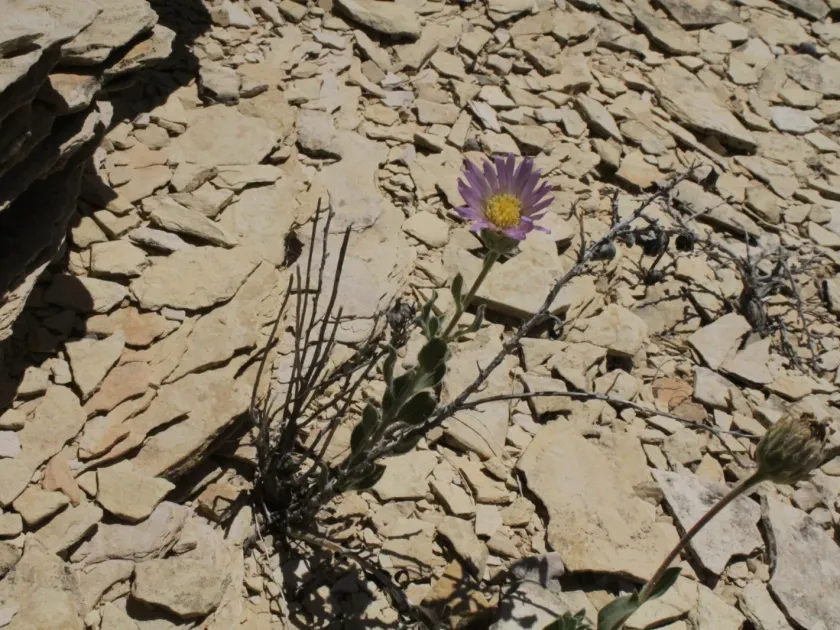
Description
Growing requirements
Wright's woodyaster, scientifically known as Xylorhiza wrightii, is a perennial flowering plant belonging to the Asteraceae family. It is natively found in the desert landscapes of Utah, USA, where it thrives in harsh environments.
The plant is scientifically recognized as a selenium accumulator, meaning it effectively extracts and stores selenium from the soil. This unique physiological trait allows it to survive in habitats that are often toxic to other plant species.
Regarding climate requirements, the species is perfectly adapted to arid conditions with high temperatures and limited precipitation. It requires significant solar exposure and will not perform well in shaded or humid settings.
The soil profile for this plant must be well-draining, typically consisting of rocky, alkaline, or clay-heavy soils. The presence of specific geological minerals is essential for the healthy development of its root structure.
While not a traditional agricultural crop, the species provides significant value in environmental science as a model for studying plant tolerance to heavy metal and metalloid-rich environments.
Main diseases and pests
The primary threats to Xylorhiza wrightii include habitat fragmentation and the encroachment of invasive plant species that compete for limited water resources.
Excessive soil moisture is perhaps the most critical threat in controlled or experimental settings. The plant is prone to rapid root decay if drainage is not sufficient, as its biology is evolved for extreme aridity.
Specific desert insects may act as herbivores, potentially damaging the foliage. However, the plant's natural toxicity due to high selenium levels provides a degree of chemical defense against generalist herbivores.
Fungal pathogens associated with damp soil conditions remain a significant risk for plants kept in nurseries or gardens. Maintaining a strict drought-like regimen is essential to prevent these infections.
Climate change and shifts in seasonal rainfall patterns could destabilize the established desert populations, as the plant relies on consistent environmental cues for its reproductive cycle.