
Mojave woodyaster
Xylorhiza tortifolia
Description
Growing requirements
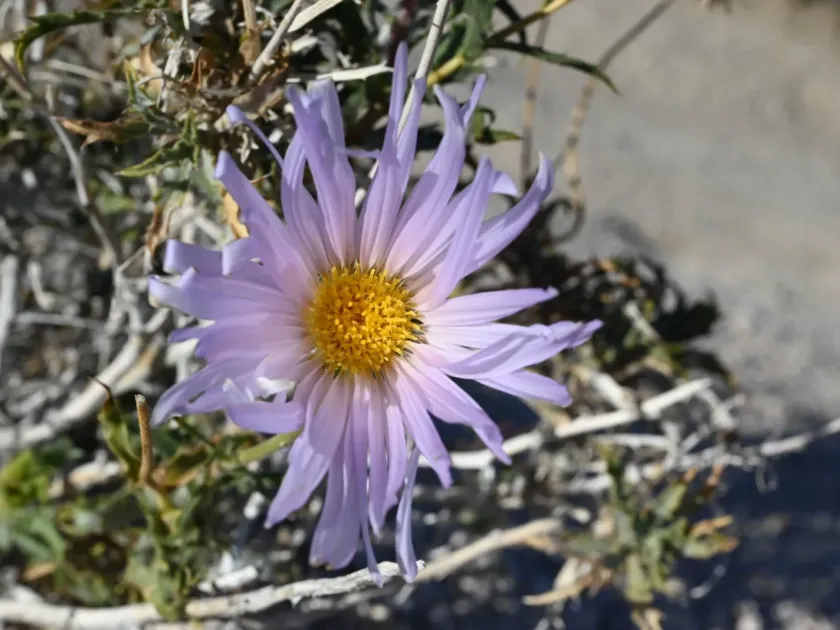
Mojave woodyaster, botanically known as Xylorhiza tortifolia, is a perennial subshrub belonging to the Asteraceae family. It is a quintessential desert plant native to the southwestern United States.
The plant is specifically adapted to arid environments, including rocky slopes and washes within the Mojave Desert. Its natural habitat is defined by intense heat and very limited seasonal precipitation.
Morphologically, the plant features distinctively twisted, grayish-green leaves covered in fine hairs. These adaptations serve as a defense mechanism against water loss during prolonged droughts.
Cultivation requirements demand extremely well-drained, nutrient-poor, and rocky soil. The species is highly intolerant of soil compaction and excessive irrigation, which can lead to rapid root rot.
The plant has minimal agricultural utility, though it is valued in xeriscaping. It is generally avoided by livestock producers because of its high selenium content, which renders the foliage poisonous to sheep and cattle.
Main diseases and pests
The primary concern regarding this plant in agricultural settings is its toxicity. As an obligate selenium accumulator, it poses a significant health risk to grazing livestock if ingested in sufficient quantities.
In its native habitat, it faces few threats from pests or diseases due to its harsh environment. However, when grown in garden conditions, it must be kept away from excessive moisture to prevent fungal pathogens from attacking the root crown.