
Smooth woodyaster
Xylorhiza glabriuscula
Description
Growing requirements
Smooth woodyaster (Xylorhiza glabriuscula) is a herbaceous perennial plant belonging to the Asteraceae family. It is native to the western United States, specifically thriving in arid landscapes and semi-desert environments where environmental stress is high.
This species is well-adapted to poor-quality soils, including shale barrens and clay-heavy substrates that are often alkaline. Its physiological structure allows it to thrive in nutrient-deficient soils where competing vegetation is minimal.
The climate requirements for this plant are centered on extreme heat and significant periods of drought. It possesses specialized mechanisms to minimize transpiration, such as reduced leaf surface area and a thick cuticle, which are vital for survival in its natural range.
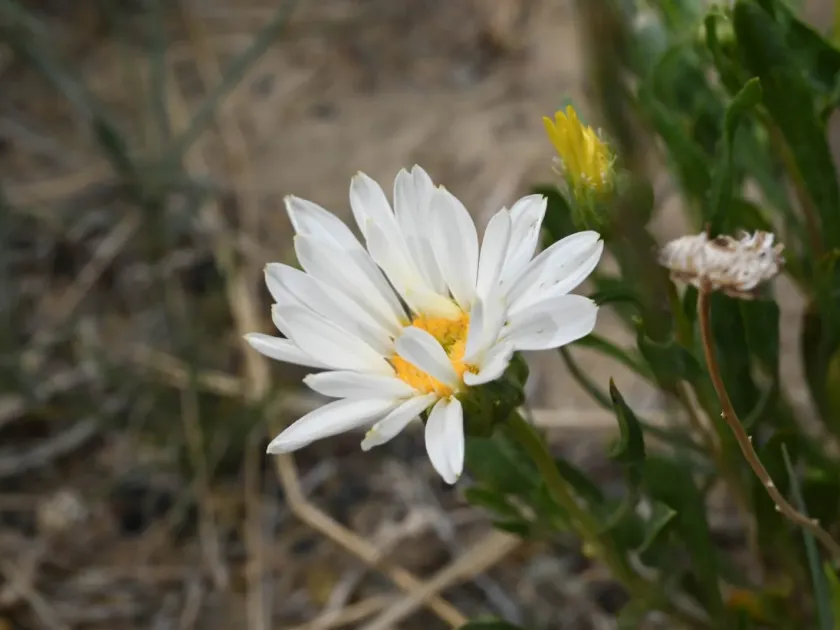
Botanically, it features a sturdy, woody rootstock that supports seasonal growth. The flowering heads are typically composed of ray and disk florets, characteristic of the daisy family, which are highly attractive to pollinators in the harsh desert environment.
While not a major commercial crop, smooth woodyaster is valuable for land reclamation and soil stabilization projects in arid regions. Its deep root system helps in maintaining soil structure and mitigating the impact of wind erosion in fragile desert ecosystems.