
Ximenia americana
Ximenia americana
Description
Growing requirements
Ximenia americana is a robust shrub or small tree belonging to the Olacaceae family. It is native to tropical regions globally, spanning across the Americas, Africa, and Asia, where it typically inhabits dry forests and scrublands.
This species is highly adaptable, often functioning as a hemiparasite that draws nutrients from the roots of nearby plants, though it remains capable of autonomous growth. It thrives in diverse soil types, including sandy, gravelly, and relatively infertile soils.
The plant demands a warm climate with ample sunlight to ensure optimal development. It is notably drought-tolerant, making it a suitable candidate for cultivation in arid or semi-arid tropical zones where water scarcity is a significant agricultural constraint.
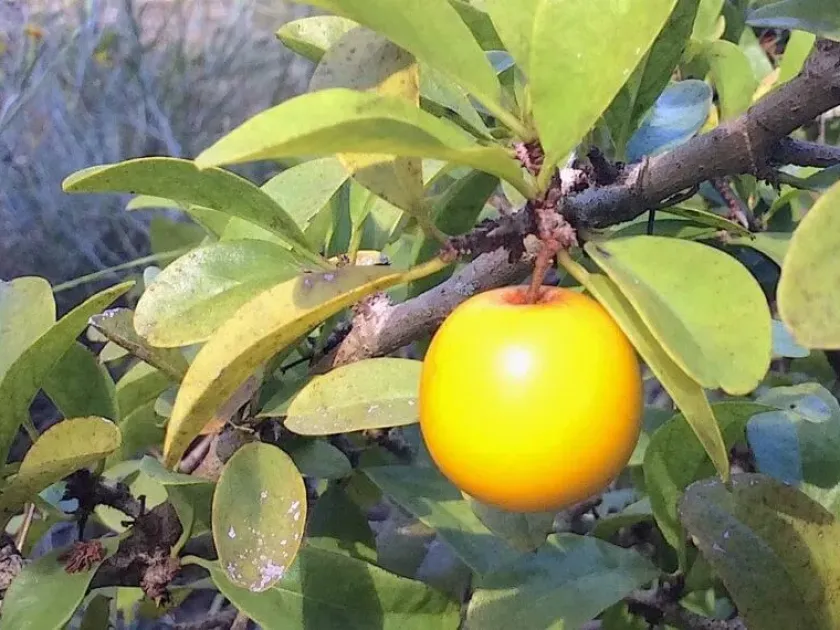
Botanically, Ximenia americana is characterized by its thorny branches and simple, leathery leaves. It produces fragrant flowers and edible stone fruits that turn yellow or red when ripe, possessing a tart yet pleasant flavor profile.
Commercially, the plant is primarily valued for its seeds, which are rich in high-quality oil. This oil is extensively utilized in the cosmetic industry for its emollient properties, as well as in traditional medicine for treating various skin conditions and promoting hair health.
Main diseases and pests
The most significant threat to Ximenia americana plantations is poor drainage, as waterlogged conditions quickly lead to root decay and fungal infections.
In various native regions, the plant is susceptible to attacks by defoliating insects and wood-boring beetles that can compromise the structural integrity of the branches.
Weed management is critical during the establishment phase, as the shrub's slow growth makes it sensitive to competition from faster-growing local vegetation.
While the plant is quite hardy, intense humidity can occasionally trigger outbreaks of leaf spot diseases if the canopy is too dense to allow for air circulation.
Effective agricultural management involves monitoring for pests and ensuring proper spacing between plants to maintain plant health and prevent the spread of localized infestations.