
Xerophyta retinervis
Xerophyta retinervis
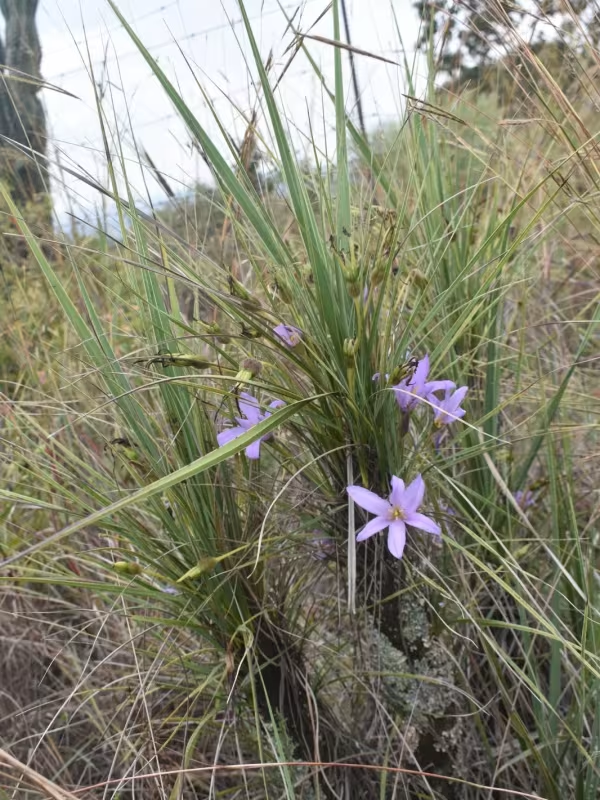
Description
Growing requirements
Xerophyta retinervis is a remarkable species belonging to the Velloziaceae family, native to the rocky landscapes of Southern Africa. It is widely recognized as a resurrection plant due to its extraordinary capacity to survive extreme desiccation.
The plant exhibits an evolutionary adaptation where it enters a state of anhydrobiosis during drought periods. Its foliage turns brown and appears dead, but internal cellular structures remain intact, allowing for rapid recovery when water becomes available.
Agricultural requirements for this species are specific, favoring well-drained, rocky or sandy substrates. It thrives in high-light environments and requires excellent aeration to prevent the root system from developing decay.
The climate must mirror its native African range, characterized by sharp diurnal temperature variations and intense ultraviolet radiation. Xerophyta retinervis does not tolerate waterlogging, which is considered the primary cause of failure in cultivation.
In terms of agricultural management, this plant requires minimal intervention. It does not demand high fertilizer inputs, as it has adapted to nutrient-poor, rocky environments throughout its life cycle.
Main diseases and pests
The robust, fibrous structure of Xerophyta retinervis serves as a natural defense mechanism against most common agricultural pests, making it a low-maintenance candidate for specific arid-land studies.
Fungal infections represent the most significant threat to the plant's health, particularly when humidity levels exceed the plant's tolerance threshold in a greenhouse or controlled setting.
Root rot is a common issue caused by stagnant water or the use of heavy, clay-rich soil media. Ensuring proper soil structure is essential for long-term survival and vitality of the specimen.
While the plant is tough, aphids or mealybugs can occasionally infest the foliage if the plant is stressed by prolonged lack of air circulation in indoor environments.
Physical disturbance of the root mass is highly discouraged, as the plant possesses a fragile root system that takes significant time to re-establish its connection to the substrate once damaged.