
Xanthosoma sagittifolium
Xanthosoma sagittifolium (L.) Schott
Description
Growing requirements
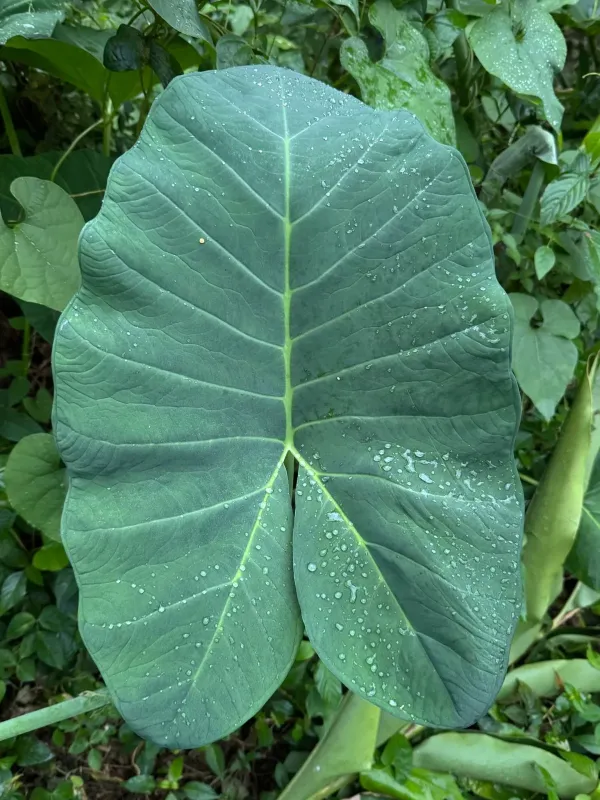
Xanthosoma sagittifolium, commonly known as tannia or cocoyam, belongs to the Araceae family. This perennial herbaceous plant is cultivated primarily for its starchy corms, which serve as a staple food source in many tropical regions worldwide. It is characterized by its large, arrow-shaped leaves and long petioles.
Originating in the tropical areas of South America, the crop thrives in warm, humid climates. The ideal temperature for consistent growth ranges between +22°C and +30°C. Prolonged exposure to temperatures below +10°C will stunt growth and may damage the root structure, making it strictly a tropical or subtropical crop.
Water requirements for this crop are significant. It performs best in environments with high rainfall or consistent irrigation systems. While it is somewhat tolerant of periodic waterlogging compared to other root crops, it prefers well-drained, fertile, loamy soils rich in organic matter with a pH level between 5.5 and 6.5.
Agronomic management involves deep soil preparation and consistent fertilization with nitrogen and potassium to support vigorous foliage and large corm development. Shade management is also important; while mature plants can tolerate full sun, young sprouts often benefit from partial shade to establish roots successfully.
Beyond its use as a primary source of carbohydrates, the leaves of Xanthosoma are widely utilized as a nutritious green vegetable. When cooked properly to neutralize calcium oxalate crystals, both the leaves and corms provide essential nutrients, making the plant a highly valuable economic crop in local agricultural sectors.
Main diseases and pests
Pest pressure is a major concern for Xanthosoma cultivation. Aphids, thrips, and spider mites frequently infest the foliage, sucking vital sap and causing yellowing or deformation of the leaves, which significantly impacts the plant's overall energy production and starch accumulation in the corms.
Root-knot nematodes pose a severe threat by invading the root system, causing galls that inhibit water and nutrient uptake. This parasitic activity weakens the plant, leading to poor yield and increasing susceptibility to secondary soil-borne pathogens that thrive in warm, moist soils.
Bacterial diseases, particularly those caused by Erwinia species, are responsible for soft rot, which can destroy entire plantations. These pathogens typically enter the plant through wounds caused by mechanical damage or insect feeding, spreading rapidly under high humidity and poor air circulation conditions.
Fungal leaf spots, such as those caused by Cercospora, result in necrotic areas on the foliage. While these infections rarely kill the plant outright, extensive defoliation reduces the photosynthetic capacity, which directly translates to smaller corm sizes and reduced overall harvest volume.
Effective pest and disease management relies on integrated strategies. This includes using certified clean planting material, rotating crops with non-host species, and maintaining optimal spacing between plants to encourage air movement and reduce the humidity levels that favor fungal development.
Harvesting
Harvesting usually occurs between 9 to 12 months after planting, depending on the specific cultivar and environmental conditions. The primary visual signal for maturity is the yellowing and wilting of the older leaves, indicating that the plant has ceased active vegetative growth and stored energy in the corms.
During the harvest process, care must be taken to minimize physical injury to the corms. Using manual tools like garden forks, the soil is loosened to allow for gentle removal of the corm clusters. Skin damage significantly shortens the shelf life and makes the crop vulnerable to storage rots.
Immediately after lifting the corms from the ground, they are cleaned of loose soil and allowed to cure in a dry, shaded place for a short period. This curing process helps seal small surface wounds and prepares the harvest for longer-term storage in cool, well-ventilated areas.
Storage conditions are vital for maintaining product quality. Proper ventilation and protection from light prevent premature sprouting and moisture loss. Keeping the corms at a stable temperature of +12°C to +15°C can maintain quality and culinary value for several months post-harvest.
In commercial operations, the harvested corms are sorted into size categories. Larger specimens are selected for fresh market distribution, while smaller corms are often separated to be processed for starch or reserved for the next planting season as high-quality vegetative propagules.