
Xanthosoma robustum
Xanthosoma robustum Schott
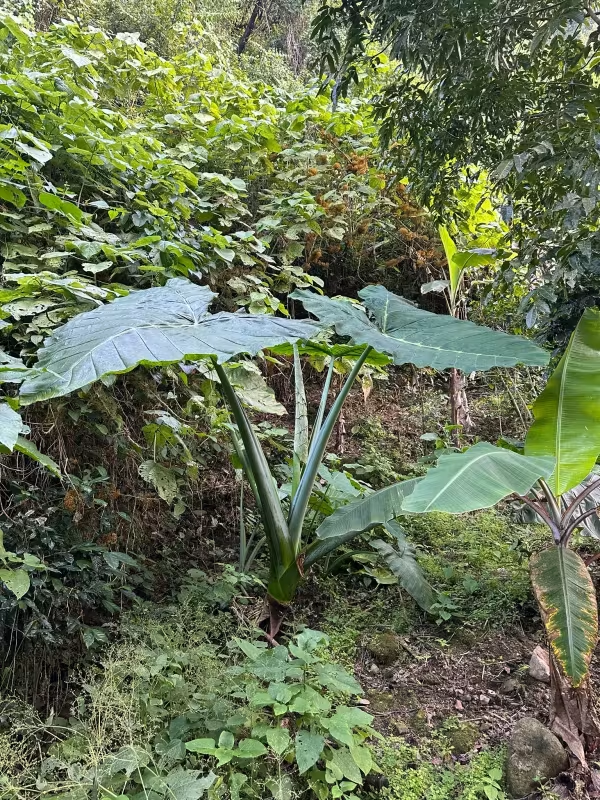
Description
Sowing dates
Xanthosoma robustum is a perennial tropical plant, which means its planting does not adhere to standard seasonal cycles of temperate zones. In tropical regions, planting of tubers or rhizome fragments is carried out at the beginning of the rainy season to ensure optimal rooting.
The best time for vegetation begins when soil temperatures are consistently above 20°C. In commercial agriculture, both manual planting and mechanized placement of planting material into prepared furrows are practiced.
A key condition for a successful start is the presence of moisture in the substrate immediately after planting. If cultivation takes place in greenhouses, planting schedules are governed by the facility's crop rotation plan.
In its natural environment, the plant reproduces mainly through vegetative propagation, as seeds are rarely formed and require specific environmental conditions. Using healthy starting material allows for rapid foliage development at the start of the season.
The recommended planting density is typically 10,000 to 15,000 plants per hectare, depending on the final objective, whether it is for tuber production or green biomass.
Growing requirements
Xanthosoma robustum, as a member of the Araceae family, has high demands regarding temperature regimes. The plant prefers bright areas with diffused light, as direct midday sun can cause burns on the large leaf blades.
For high-quality growth, the crop requires deep, loose, and fertile soils rich in organic matter. An optimal soil pH range is 5.5–6.5, which facilitates better uptake of nutrients.
The plant is highly demanding of moisture; therefore, on plantations, it is essential to organize regular irrigation, especially during the dry season. However, waterlogging and standing water lead to root rot, so proper drainage is mandatory.
Climatic requirements are restricted to tropical and subtropical zones where frost is absent. Even a slight drop in temperature to 10-12°C slows down development, and temperatures below 5°C can be fatal to the aerial parts.
During the active growing season, the crop absorbs large amounts of nitrogen and potassium, so applying organic fertilizers while leaves are growing is a critical agronomic practice.
Yield
The yield of Xanthosoma robustum varies significantly depending on agronomic practices and soil quality. On average, one hectare of plantation can yield between 15 and 30 tons of edible tubers.
In addition to the main tubers, lateral shoots are also valuable and are used in cooking and for further propagation. The total output of produce increases significantly if the farm specializes in harvesting young leaves.
The highest yield indicators are achieved under conditions of uniform moisture throughout the growing season. In intensive conditions, the harvest can be collected 9–12 months after planting.
Yield stability depends directly on eliminating temperature fluctuations and effective weed control during initial stages. A lack of nutrients during tuber formation leads to a decrease in produce weight.
The economic feasibility of cultivation is based on the combination of obtaining starchy tubers and nutritious greens, making the crop multifunctional in agricultural production.
Main diseases and pests
The greatest threat to the crops comes from various rots that affect the rhizome in conditions of excessive moisture. Pathogenic fungi can spread rapidly if soil aeration is poor or water stagnation occurs on the field.
Among pests, aphids and spider mites are the most dangerous, as they feed on the sap of young leaves and can act as vectors for viral infections. Constant monitoring of plant condition allows for the timely identification of infection sites.
Slugs often damage young shoots, which is critical during early development. In some regions, soil nematodes attacking the root system cause significant damage.
Disease prevention consists of adhering to crop rotation and using healthy, disinfected planting material. It is important to avoid excessive overcrowding to ensure natural air circulation between plants.
Pest and disease management includes applying fungicides at the initial signs of infection and removing affected plants from the site to prevent the spread of the infection to adjacent rows.
Harvesting
Harvesting Xanthosoma is carried out during the tuber maturation period, when the aerial parts begin to yellow and wither. This is a visual signal that the plant has accumulated sufficient nutrients.
Tubers are carefully dug up using garden forks or mechanized diggers, taking care not to damage the skin. Mechanical damage significantly reduces the shelf life of the produce and promotes rot.
After harvesting, tubers are cleaned of soil and sorted. In large-scale operations, they are often dried in the shade to allow minor surface wounds to heal.
Harvested tubers are stored in a cool, dry place with good ventilation. Under proper conditions, they maintain their quality for several months, which facilitates logistics and marketing.
Leaves intended for consumption are harvested selectively throughout the growing season, without damaging the growth point so as not to hinder the development of the main tubers.