
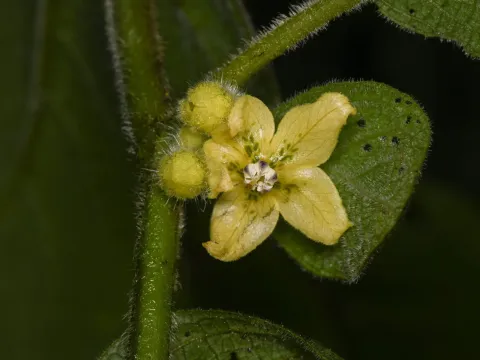
Witheringia
Witheringia
Witheringia belongs to the genus of plants within the Solanaceae family, comprising approximately 15–20 species native to the tropical regions of Central and South America.
What the section contains

Witheringia
In their natural habitat, these plants propagate through seeds dispersed by animals or birds that consume their fleshy fruits.
For agricultural or experimental cultivation, sowing seeds in well-drained soil rich in organic matter is recommended for optimal germination.
The ideal time to begin cultivation is after the rainy season, ensuring that young seedlings are provided with a stable and consistent temperature environment.
Seeds often require pre-sowing stratification or soaking to improve emergence rates, as wild-type forms possess biological dormancy mechanisms to prevent premature growth.
This crop is highly demanding regarding light levels, preferring partial shade during its juvenile stages and bright, diffused sunlight during the active fruiting phase.
The optimal temperature range for healthy development is between 18 and 26 degrees Celsius, as sharp fluctuations can severely impact fruit setting and yield.
Soil requirements involve loamy or sandy substrates with a pH level ranging from 5.5 to 6.5, which is typical for most forest-dwelling Solanaceous species.
The plant is moisture-loving and requires regular, moderate irrigation, as waterlogging in the root zone quickly leads to the development of crown and root rots.
To support vigorous growth, balanced mineral fertilizers should be applied, focusing on nitrogen during the vegetative phase and potassium during the flowering period.
The most significant pests affecting Witheringia include members of the order Hemiptera, specifically whiteflies and various species of spider mites.
Under conditions of high humidity, the plants are frequently susceptible to late blight and grey mold, which can rapidly spread across stems and foliage.
Pathogen management strategies should prioritize preventive measures, such as implementing crop rotation and removing plant debris that harbors fungal spores.
The application of biological insecticides is generally the preferred method for pest control in greenhouse environments or small-scale farming operations.
Routine inspection of leaf undersides allows for the early detection of insect colonies, significantly simplifying the process of remedial plant treatment.
Harvesting Witheringia fruits is carried out as they reach biological maturity, signaled by the fruit wall achieving its characteristic color and texture.
It is advisable to conduct harvests during the early morning hours, when plant tissue moisture content is optimal for post-harvest storage and transport.
As the fruits are often consumed fresh or utilized for breeding purposes, it is critical to prevent mechanical damage during the picking process.
Post-harvest, the produce should be graded by maturity level to ensure uniform ripening and to minimize losses during storage and distribution.
Stored harvests must be kept in a cool, well-ventilated facility away from direct sunlight and areas subject to moisture fluctuations.