
Witheringia solanacea
Witheringia solanacea
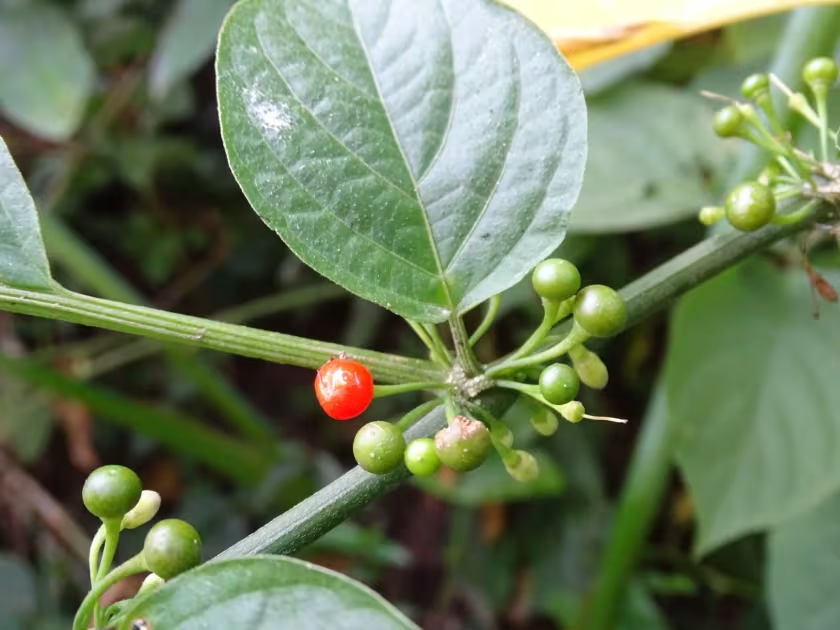
Description
Growing requirements
Witheringia solanacea is a herbaceous perennial plant belonging to the diverse Solanaceae family. As a relative of widely cultivated crops such as peppers and tomatoes, it shares similar growth patterns while possessing distinct botanical characteristics suitable for tropical climates.
The native distribution of this species spans across the mountainous regions of Central and South America. It thrives in high-humidity environments, usually found in shaded or semi-shaded forest borders where stable temperatures and fertile soil are naturally maintained throughout the year.
For cultivation, the plant requires well-draining, nutrient-rich soil with an emphasis on moisture retention without waterlogging. It is sensitive to direct, high-intensity sunlight and extreme wind, making protected cultivation or careful site selection essential for optimal development.
Botanically, the plant is characterized by its branching structure and alternate, ovate leaves. The flowers are small, typically pale yellow or white, emerging from leaf axils. The fruit is a small, juicy berry that serves as the main harvestable part of the plant, often used in regional culinary practices.
Economic and agricultural interest in Witheringia solanacea is currently niche. It is mainly utilized for its edible fruits which are harvested locally. Ongoing interest is directed toward understanding its genetic potential and secondary metabolites that may hold value for future agricultural application.
Main diseases and pests
The crop is vulnerable to common Solanaceae diseases such as late blight (Phytophthora) and various fungal wilts that thrive in excessive moisture. Monitoring soil drainage and airflow around the canopy is critical to reducing the incidence of these pathogens.
Insects like aphids, whiteflies, and spider mites pose the most significant threat to plant health. Implementing integrated pest management (IPM) strategies, including biological control agents and localized treatments, is recommended to maintain a healthy crop throughout the growing season.