
Kentucky wisteria
Wisteria macrostachya
Description
Growing requirements
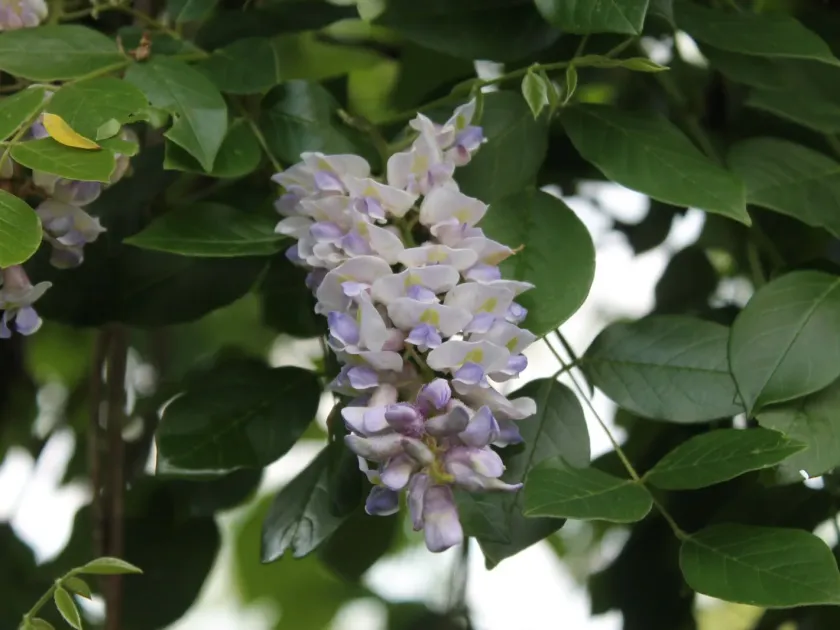
Kentucky wisteria (Wisteria macrostachya) is a member of the Fabaceae family. It is a vigorous, deciduous, woody climbing vine known for its excellent cold tolerance, making it a preferred choice for temperate climates compared to other wisteria species.
The plant originates from the southeastern parts of North America, where it naturally inhabits floodplains and forest margins. Its ability to thrive in diverse conditions has made it a popular ornamental plant for vertical gardening in parks and gardens.
For optimal growth, this vine requires full sun exposure to ensure prolific blooming. It performs best in fertile, loamy, and well-drained soils, ideally with a slightly acidic to neutral pH balance to prevent nutritional deficiencies.
Agricultural management requires providing robust support structures, such as pergolas, trellises, or reinforced walls. Regular watering is essential during the establishment phase and during hot summer months to ensure vigorous vegetative growth.
Pruning is the most critical management practice for this crop. Annual pruning should be performed twice a year: once in summer to prune back lateral growth, and once in late winter to prune back the previous year's growth to encourage flower bud development.
Main diseases and pests
The primary pests affecting Wisteria macrostachya include aphids, which colonize tender new foliage and stems. Spider mites may also become an issue during extended hot and dry periods, requiring monitoring and possible treatment.
Regarding diseases, the most common issue is leaf chlorosis, which usually indicates an iron deficiency or pH imbalance. Powdery mildew may occur if the planting site lacks sufficient air circulation, requiring targeted fungicidal intervention if symptoms appear.