
Welfia regia
Welfia regia
Description
Growing requirements
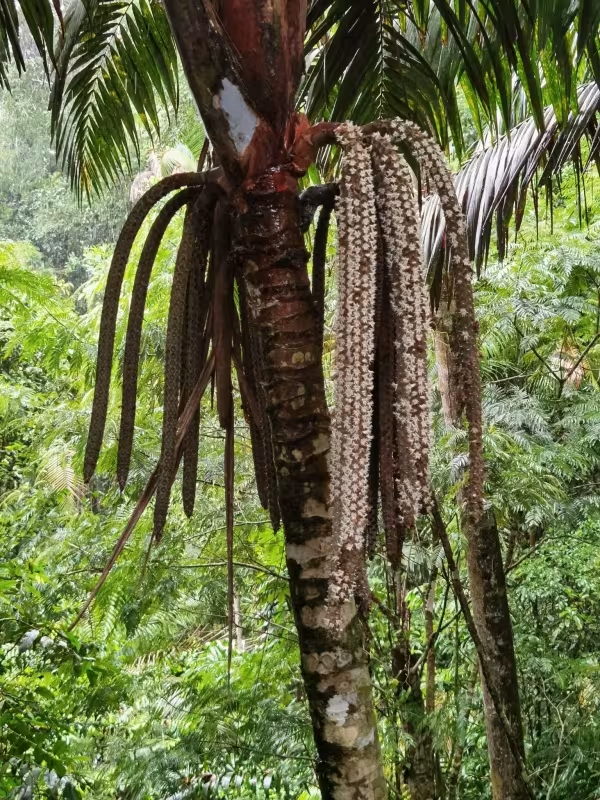
Welfia regia, commonly known as the royal welfia, is a magnificent single-stemmed palm belonging to the Arecaceae family. In its natural habitat, it can reach heights of up to 20 meters, characterized by a smooth, sturdy trunk and long, graceful pinnate leaves that display a distinctive reddish-brown color when young.
This species is native to the lowland and montane tropical rainforests of Central and South America, spanning countries such as Costa Rica, Panama, Colombia, and Ecuador. It thrives in high-humidity environments where the forest canopy provides consistent moisture and protection from extreme elements.
Climate requirements for Welfia regia are strict: it demands a strictly tropical climate with constant temperatures. It is highly sensitive to cold and cannot tolerate even minor frosts, which restricts its cultivation to equatorial or tropical regions where thermal stability is guaranteed.
The soil profile for this palm must be deep, fertile, and well-draining. While the plant loves high humidity, it is extremely intolerant of waterlogged soil conditions, which can quickly lead to root rot and fatal damage to the plant's vascular system.
Light management is crucial, as the palm prefers dappled or filtered sunlight, especially during its juvenile stages. Excessive exposure to direct, harsh sunlight can cause scorching of the leaves, whereas appropriate light levels foster healthy leaf development and deep color saturation.
Main diseases and pests
Fungal pathogens represent the most significant threat to Welfia regia, particularly in stagnant, high-humidity environments. Leaf spot diseases can spread rapidly if the foliage remains wet for extended periods without adequate air circulation.
Common palm pests such as scale insects and mealybugs can infest the trunk and the bases of the petioles. These insects sap the plant's vitality, making it susceptible to further environmental stress and potentially causing significant decline in plant health.
Harvesting
The host of traditional uses for Welfia regia includes the harvesting of its foliage by indigenous communities. The tough, long-lasting leaves are frequently used as roofing material for dwellings, providing excellent shelter against intense tropical rains.
The fruits of the palm serve as a vital ecological resource. They are consumed by a wide variety of wildlife, including birds and small mammals, which are essential for seed dispersal and the maintenance of the local forest biome.