
Wahlenbergia stellarioides
Wahlenbergia stellarioides
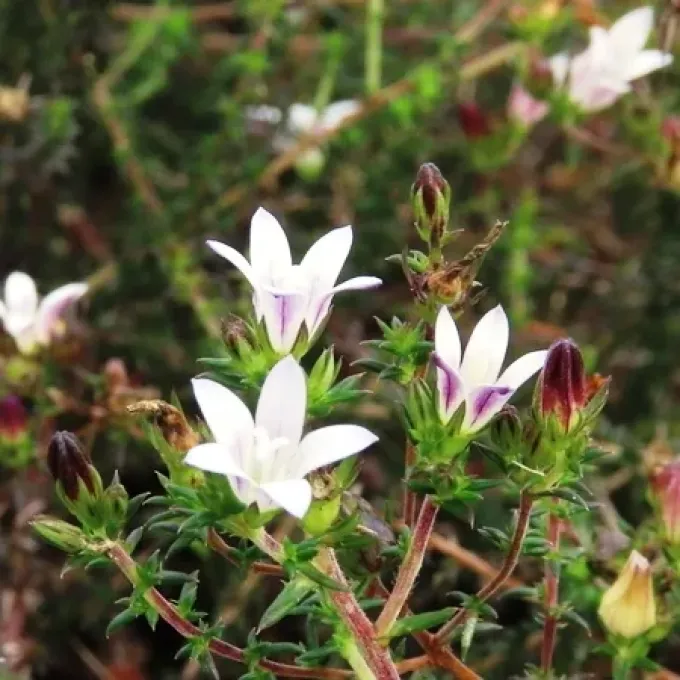
Description
Growing requirements
Wahlenbergia stellarioides is a herbaceous perennial plant belonging to the Campanulaceae family. It is recognized for its elegant, star-shaped flowers, which provide a delicate aesthetic appeal to various ornamental landscape designs.
The species originates from Southern Africa, where it has adapted to diverse climatic conditions. Its natural habitat is typically characterized by well-drained slopes, which has influenced its specific requirements for soil composition in horticultural use.
For optimal growth, this plant requires a location with bright but indirect sunlight. While it appreciates high light levels, exposure to intense direct afternoon sun in warmer climates can cause damage to the foliage and impact the flowering cycle.
The soil should be light, porous, and nutrient-rich. Proper drainage is the most critical factor for the long-term survival of the plant, as it is highly susceptible to root rot in waterlogged conditions. Mixing the substrate with inorganic materials like perlite or sand is highly recommended.
Regular maintenance involves moderate irrigation, ensuring the growing medium remains moist but never saturated. During the active growing season, applying balanced, low-nitrogen fertilizers will encourage vigorous development and consistent flowering throughout the cycle.
Main diseases and pests
Root and crown rots are the most significant threats to Wahlenbergia stellarioides. These are typically caused by overwatering or poor drainage systems. Avoiding standing water around the base of the plant is essential for disease prevention.
Pest issues such as spider mites and aphids may appear if the environmental conditions become too dry or stagnant. Regular monitoring and the application of appropriate biological control measures or insecticidal soaps can mitigate these risks effectively.