
Alpine catchfly
Viscaria alpina
Description
Sowing dates
Propagation is typically carried out via seeds. Sowing is best performed in late autumn to allow for natural stratification, which significantly improves the germination rate in the following spring season.
If sowing indoors, seeds should be sown on the surface of a sandy, loose substrate without covering them, as light is a critical factor for the successful activation of the embryo during the germination process.
Growing requirements
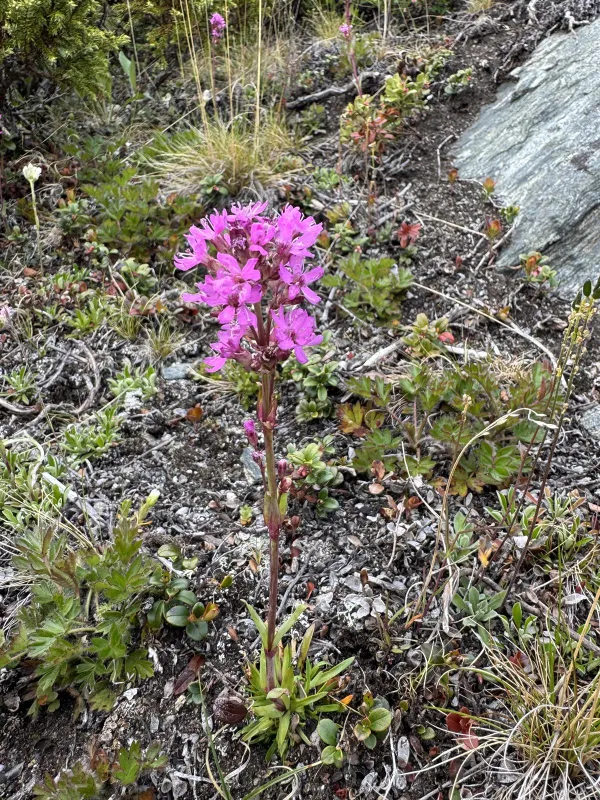
Alpine catchfly (lat. Viscaria alpina) is a perennial herbaceous plant belonging to the Caryophyllaceae family. It is naturally distributed throughout arctic and alpine regions, showing remarkable adaptation to harsh climates and nutrient-poor, stony soils.
The plant typically forms dense rosettes of narrow, lanceolate leaves. Its growth habit is compact, usually reaching heights between 5 and 15 centimeters, which is an evolutionary adaptation to withstand the strong, consistent winds of high-altitude habitats.
In terms of soil requirements, Viscaria alpina thrives in well-drained, slightly acidic, or neutral substrates. It is essential to avoid heavy, water-retentive soils, as the plant is highly sensitive to root saturation, which often results in rapid decay.
Climate adaptability is the primary strength of this species. It is extremely cold-hardy, functioning efficiently during short growing seasons and resisting freezing temperatures common in mountainous and arctic environments.
Cultural success depends on full sun exposure. While the plant can tolerate light partial shade, insufficient light intensity will compromise its vegetative density and result in reduced flowering performance during the peak summer period.
Main diseases and pests
The main threats to Alpine catchfly are related to environmental management rather than pests. Fungal diseases, particularly crown and root rots, are prevalent when the soil drainage system fails or moisture levels are consistently too high.
Pest pressure is relatively low due to the plant's natural chemical defenses. However, in gardens with high populations of mollusks, such as slugs and snails, the young vegetative parts may require protection to prevent leaf damage during the early growing phase.