
Victoria cruziana
Victoria cruziana
Description
Sowing dates
The propagation of Victoria cruziana begins with precise seed storage. Seeds must be kept in water at temperatures around 10–12 degrees Celsius to maintain viability, as desiccation destroys the embryo.
Sowing occurs in early spring in specialized aquatic greenhouses. The substrate should be rich in nutrients, typically a mix of clay and compost, submerged in water maintained at 25–28 degrees Celsius.
As the seedlings develop their first floating leaves, they require careful handling. Moving them into larger containers is necessary to ensure the rapid expansion of the root system, which is characteristic of the species.
Transplanting into the final cultivation pool requires a stable water temperature of at least 22 degrees Celsius. Any thermal shock during this stage can severely stunt the plant's growth for the entire season.
Given its tropical origin, cultivation outside of heated artificial ponds is rarely possible. Success depends entirely on the ability to replicate the environment of the South American floodplains.
Growing requirements
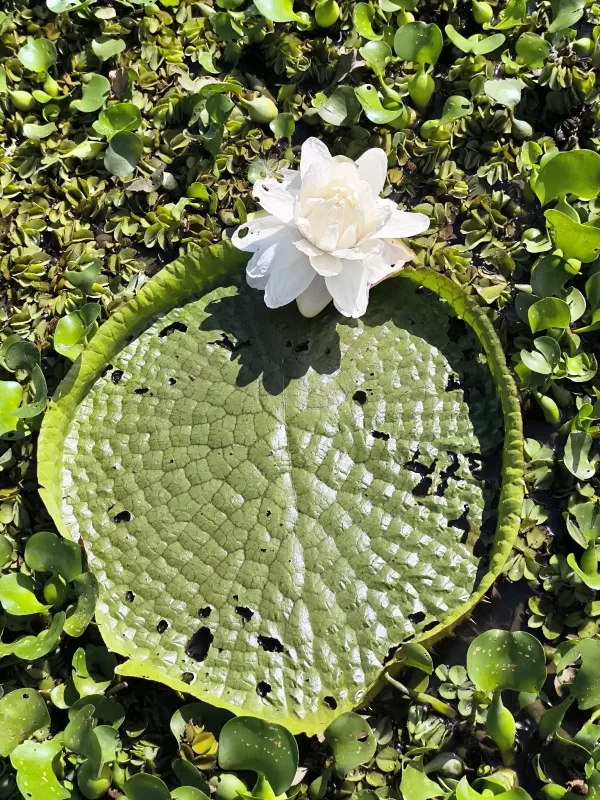
Victoria cruziana is a member of the Nymphaeaceae family, known for its massive, circular, upturned leaves. It thrives in stagnant or slow-moving warm water bodies with high light intensity.
The soil requirements involve a heavy, nutrient-dense medium. A mixture of loam, clay, and organic fertilizers is essential to support the significant biomass production of this aquatic giant.
High light levels are mandatory. Under natural conditions, these plants grow in full sun; in greenhouses, supplemental lighting is often required to achieve the full diameter of the leaves.
Water quality parameters, such as pH and dissolved mineral content, must be regularly tested. The plant is sensitive to chemical fluctuations and requires a consistent supply of micronutrients for healthy leaf development.
Adequate spacing is a critical logistical requirement. Because leaves can reach two meters in width, each plant needs a significant amount of surface area to avoid leaf overlap and competition for light.
Main diseases and pests
Fungal diseases, particularly those causing leaf blight, are common in the humid, warm environments where Victoria cruziana is grown. Proper ventilation is the primary prevention method.
Aphids represent a frequent pest that damages the upper leaf surfaces. Integrated pest management using non-toxic biological agents is preferred to protect the delicate aquatic ecosystem of the pond.
Nematode infestations can damage the root structures, leading to stunted growth. Using sterile soil media and monitoring the water intake are essential to mitigate this risk.
Algal blooms can compete with the plant for nutrients and block the light needed for underwater development. Regular cleaning and biological filters are standard practice in professional cultivation.
Mechanical damage to leaf edges can serve as an entry point for secondary infections. Handling the plants with extreme care and maintaining stable water levels are vital for long-term health.