
Leatherleaf viburnum
Viburnum rhytidocarpum
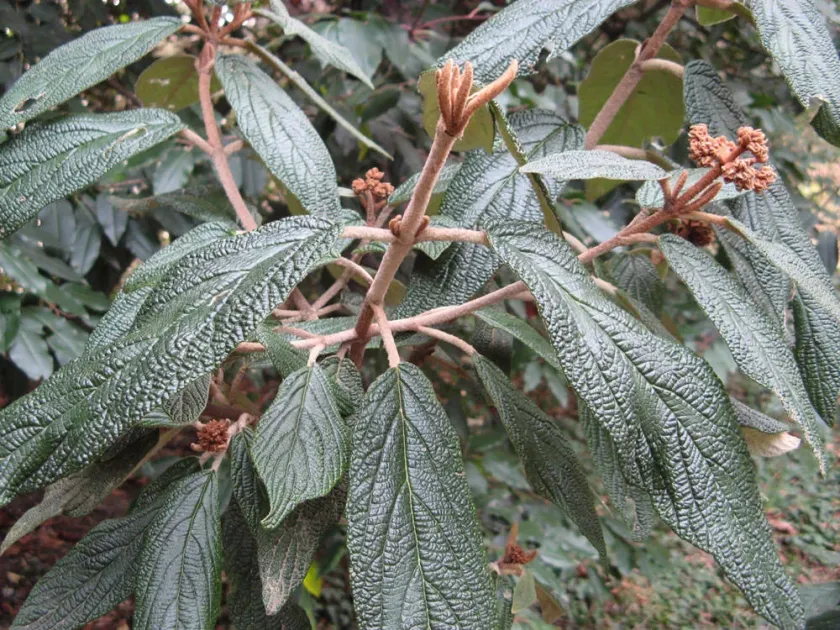
Description
Sowing dates
Leatherleaf viburnum is best planted during the early spring once the ground has thawed or in the autumn to allow root establishment before winter frost.
Propagation through semi-hardwood cuttings during mid-summer provides the most reliable results for maintaining the characteristics of this shrub.
Seeds of this species require a cold stratification process to overcome dormancy, usually lasting for several months in a controlled environment.
When transplanting nursery stock, ensure the root ball is at the same level as the surrounding soil to prevent stem rot and encourage growth.
Adequate spacing, typically 2 to 3 meters apart, is essential to allow for the natural outward growth habit of this wide-spreading evergreen shrub.
Growing requirements
Viburnum rhytidophyllum, belonging to the Adoxaceae family, is a distinct evergreen shrub originating from western and central China.
The species thrives in fertile, well-draining soil that is rich in organic matter and maintains a slightly acidic to neutral pH balance.
It prefers a location with partial shade to full shade; direct exposure to intense afternoon sun often causes leaf scorch and dehydration.
Watering requirements are moderate; however, the plant demands consistent moisture during its first year of establishment to develop a robust root system.
Mulching the base of the shrub annually helps retain soil moisture and protects the shallow root system from extreme temperature fluctuations.
Main diseases and pests
Common pests affecting this plant include viburnum leaf beetles and aphids, which can cause significant defoliation if left untreated.
Fungal issues such as powdery mildew or leaf spot may occur if the foliage remains wet for extended periods or if air circulation is insufficient.
Integrated pest management strategies, such as physical removal of larvae and balanced fertilization, help mitigate most common plant health concerns.
Proper pruning techniques are vital to remove deadwood and maintain the aesthetic structure of the shrub while improving overall airflow.
- Annual pruning of dead branches
- Monitoring for aphid infestations
- Fungicide application for leaf spot
- Deep watering during droughts
- Applying organic mulch layers