
Vella aspera
Vella aspera
Description
Growing requirements
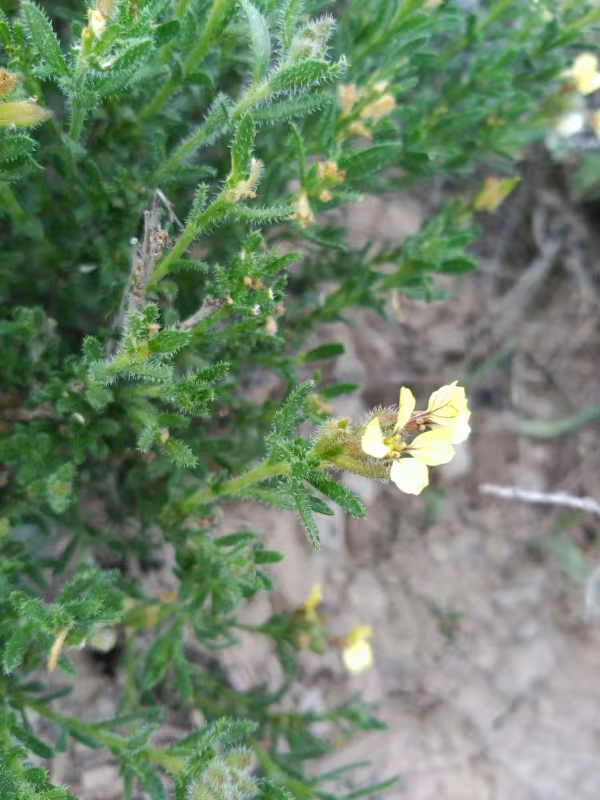
Vella aspera is a perennial plant species belonging to the Brassicaceae family. It is recognized for its characteristic rough, hairy foliage, which is an evolutionary adaptation designed to minimize transpiration in arid environments.
The plant originates from the Mediterranean region, specifically the Iberian Peninsula. It is naturally found in rocky, calcareous habitats where it survives extreme thermal conditions and long periods of low precipitation.
For successful cultivation, Vella aspera requires well-drained, alkaline soils. It is particularly sensitive to waterlogging, as the stagnant moisture encourages root decay and rapidly impairs the plant’s structural integrity.
The plant demands high levels of direct sunlight to maintain its typical morphology and vigorous growth. It is classified as an extremophile within the agricultural context, showing remarkable resilience to high solar irradiance and poor nutrient availability.
While not a common industrial crop, it serves as a genetic resource in plant breeding programs. Its drought-tolerant traits are highly valued for developing new, resilient agricultural varieties within the mustard family.
Main diseases and pests
The primary threat to Vella aspera is fungal infection, specifically root rot, which typically occurs when the substrate remains excessively damp for long durations. Proper drainage is the most effective preventative measure.
Pests such as flea beetles are common attackers in members of the Brassicaceae family. These insects target the leaves, potentially damaging the plant's surface and reducing the efficiency of photosynthesis during the growing season.
Aphids can also colonize the young stems, especially if the plants are grown in sheltered or humid environments with low air circulation. Early detection and mechanical removal are usually sufficient for small-scale plantings.
Powdery mildew represents a secondary threat during periods of high humidity and poor airflow. Managing the density of the planting is essential to ensure adequate ventilation and to prevent the spread of spores.
Consistent monitoring and maintaining a balanced, dry soil environment are the cornerstones of successful cultivation. Using mineral mulch or gravel can help maintain a dry collar and protect the plant from soil-borne pathogens.