
Velezia rigida
Velezia rigida
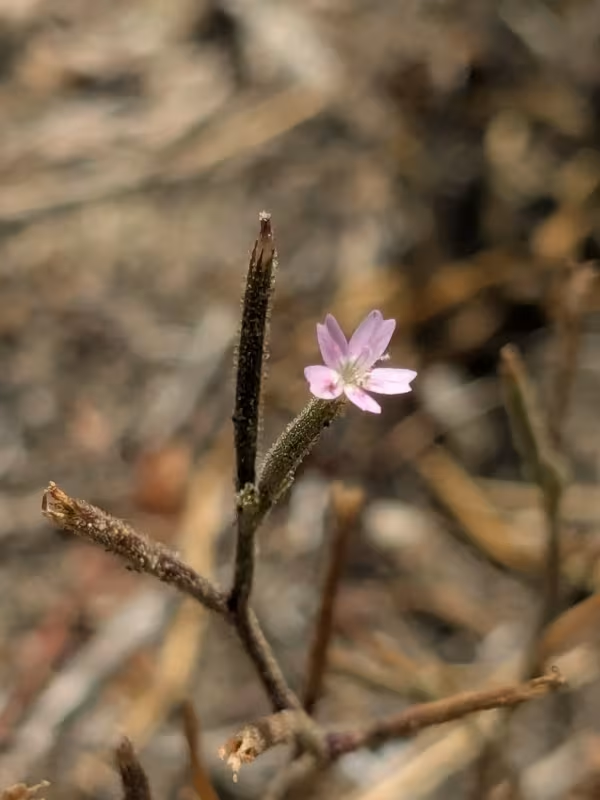
Description
Growing requirements
Velezia rigida belongs to the Caryophyllaceae family. It is a small herbaceous plant typically found in wild, semi-arid habitats rather than being used for commercial agricultural production.
The plant is characterized by its rigid stems and narrow, linear leaves. This morphological structure is an evolutionary adaptation designed to conserve water and survive in high-temperature environments with low annual precipitation.
Its natural distribution covers the Mediterranean region, the Caucasus, and parts of Western Asia. It thrives in open, sunny locations where it can dominate rocky or sandy soils that are generally unsuitable for traditional crop farming.
Regarding soil preferences, Velezia rigida requires excellent drainage. It is commonly found on nutrient-poor, stony ground where the substrate prevents waterlogging and inhibits the growth of more competitive plant species.
Climate requirements include distinct dry seasons. The plant completes its lifecycle rapidly to avoid the harshest summer conditions, demonstrating strong xerophytic traits typical for the genus in arid ecosystems.
Main diseases and pests
Like many species within the Caryophyllaceae family, the plant can be susceptible to fungal infections such as rusts during periods of unseasonable, high humidity.
Soil-borne pathogens causing root rot can impact Velezia rigida if the soil structure is altered or if there is stagnant water, although these conditions are rarely encountered in its natural habitat.
Pests such as cutworms may feed on the stems, particularly in the seedling stage, causing significant damage if the plant population density is high.
Aphids occasionally infest the plant during the flowering stage, potentially acting as vectors for plant viruses, which poses a minor risk to surrounding vegetation.
Management of this species in an agricultural context usually involves standard tillage practices that disrupt the soil surface and discourage the establishment of seedlings in crop fields.