
Velezia quadridentata
Velezia quadridentata
Description
Growing requirements
Velezia quadridentata is an annual herbaceous plant belonging to the Caryophyllaceae family. In agronomic contexts, it is rarely classified as a crop, but rather as an invasive or ruderal plant that appears in agricultural fields, meadows, and along the borders of cultivated lands.
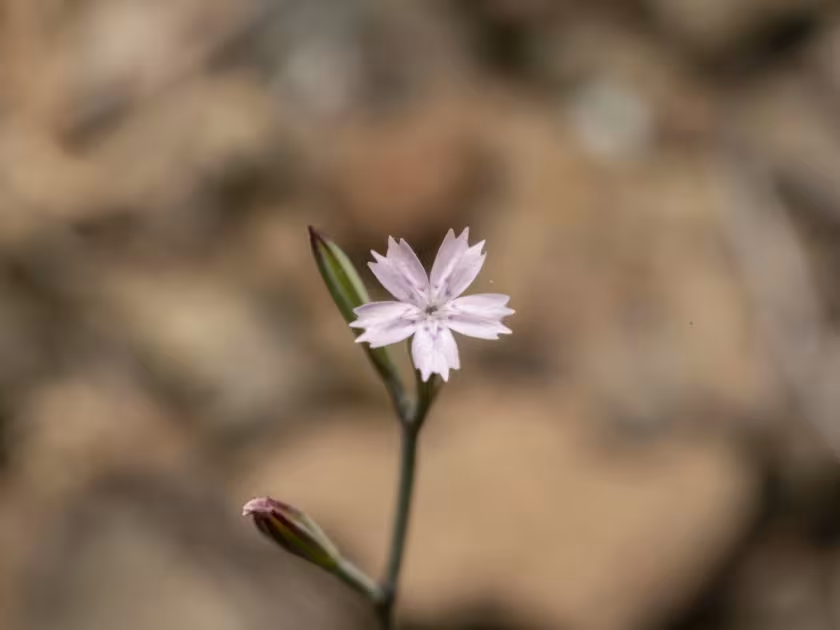
The plant is characterized by a slender, branched stem that can grow up to 30 centimeters in height. Its leaves are linear and opposite, providing a delicate appearance. It typically blooms with small, four-toothed flowers, from which the name of the species is derived, appearing mostly in late spring and summer.
Originating from the Mediterranean and Western Asian regions, it is perfectly adapted to arid, semi-arid, and rocky environments. It is often found on dry slopes, poor soils, and disturbed areas where water availability is limited throughout the peak growing season.
In terms of soil requirements, this species favors well-drained, sandy, or rocky substrates. It exhibits high tolerance for temperature extremes, which allows it to colonize niches that are inhospitable to most standard agricultural crops, particularly in regions with harsh continental climates.
From an agrotechnical perspective, this plant is treated as a competitor in field production. Because it thrives in nutrient-poor and dry conditions, its presence often indicates that the soil is not being utilized to its full productive potential, necessitating management through mechanical or chemical means.
Main diseases and pests
The primary threat posed by Velezia quadridentata is its role as a resource competitor in agricultural plots. In regions where water is a limiting factor for yield, this plant competes for moisture, which can lead to stunted growth in commercial crops if the weed density is high.
The plant can act as an alternative host for various pathogens, including fungi and viral diseases that infect the Caryophyllaceae family. While not a primary reservoir, it should be considered in integrated pest management programs to prevent the spread of diseases to sensitive horticultural or field crops.
Common insect pests include sap-sucking insects like aphids, which find shelter in the dense clusters of the plant. These insects can be vectors for various phytopathogens, potentially increasing the risk of disease outbreaks in adjacent high-value crops if the weed is left unchecked.
Control strategies involve a combination of chemical control using herbicides and cultural practices. Early season tillage is particularly effective at destroying seedlings before they establish a deep root system. Maintaining competitive crop density is also crucial to suppress the germination of Velezia seeds.
Ongoing monitoring of field margins is essential, as these areas often serve as a source for the dispersal of seeds into the cultivated sections. Implementing a rigorous weeding schedule and ensuring clean seed inputs are the most effective long-term strategies for managing this species in agricultural landscapes.