
Vatricania guentheri
Vatricania guentheri
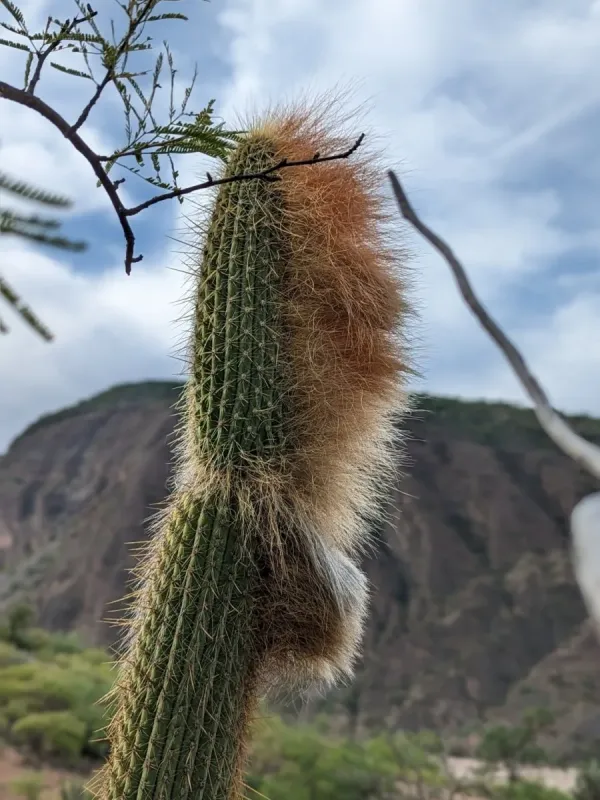
Description
Growing requirements
Vatricania guentheri is a distinct species within the Cactaceae family, native to the arid valleys of Bolivia. Known for its columnar growth and dense, hair-like spines, it has become a prized specimen for specialized collections and botanical gardens.
The culture demands high light intensity to maintain its characteristic structure and density of bristles. Without adequate sunlight, the stems tend to etiolate, losing their natural decorative appeal and structural integrity.
Soil requirements for this cactus focus on rapid drainage and aeration. A mixture comprising coarse sand, crushed volcanic rock, and a small portion of humus is considered optimal to prevent waterlogging around the root system.
Climatic conditions should mimic the arid environments of its origin. During the active growing season, temperatures between 22°C and 28°C are ideal. In winter, the plant requires a dormant period with cooler temperatures to trigger flowering cycles.
Irrigation practices must be highly disciplined. Water should only be applied when the substrate is completely dry throughout the pot depth. Excessive moisture during the cooler months inevitably leads to irreversible root rot.
Main diseases and pests
Root and stem rot caused by improper watering remain the most significant threats to the survival of Vatricania guentheri. Maintaining excellent ventilation is essential to discourage fungal growth on the stem surface.
Spider mites frequently target the plant in dry, stagnant air conditions. These pests thrive in indoor environments and can quickly damage the delicate epidermis, leaving unsightly patches that never fully recover.
Mealybugs represent a common pest threat, often hiding deep within the fibrous, woolly covering of the areoles. Regular inspections are necessary to detect early colonization before the infestation spreads significantly.
Viral or bacterial infections can manifest if the plant suffers mechanical damage or cold stress. Keeping the greenhouse environment sanitized and using sterilized pruning tools are standard protective measures.
Balanced fertilization is key; using high-nitrogen products must be avoided, as this causes succulent stems to become soft and susceptible to secondary infections during the wet season.