
Vatica oblongifolia
Vatica oblongifolia
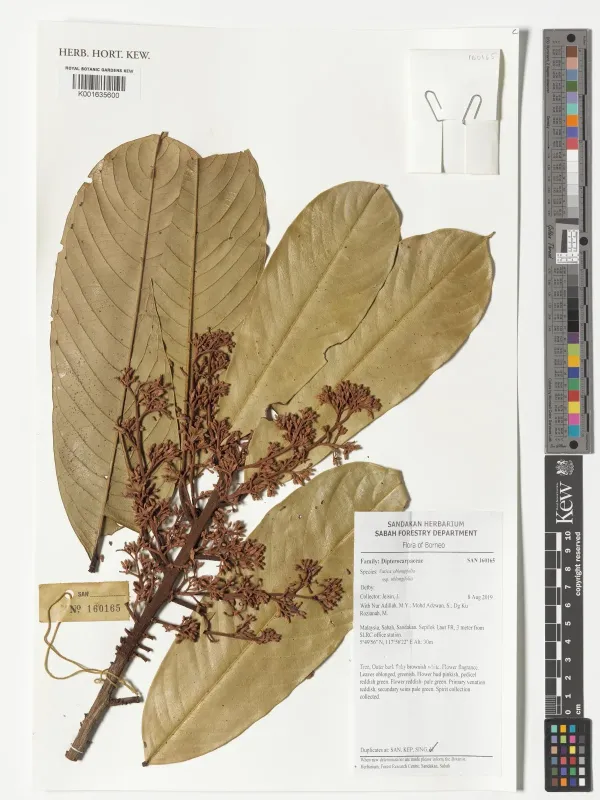
Description
Growing requirements
Vatica oblongifolia is a distinct species belonging to the Dipterocarpaceae family. Native to the tropical rainforests of Southeast Asia, this tree has evolved to thrive in environments characterized by persistent high temperatures and significant annual rainfall patterns.
The plant requires specific pedoclimatic conditions to reach its potential. It prefers well-drained, nutrient-rich soils with a slightly acidic profile. While it loves moisture, stagnant water is detrimental to its root system, making proper drainage an essential factor in successful cultivation.
Light management is crucial for this species. In its natural habitat, Vatica oblongifolia develops under the shade of the forest canopy during its early stages. Therefore, agricultural practices must include shading techniques or intercropping to protect juvenile plants from direct, intense tropical sunlight.
Regarding propagation, the seeds exhibit recalcitrant behavior, meaning they lose viability quickly. Successful cultivation relies on immediate planting after harvest. Nurseries must maintain high humidity levels and temperature stability to ensure high germination rates and healthy seedling development.
The botanical architecture of this tree is defined by its oblong leaves and dense timber structure. Its growth rate is moderate, typical of many dipterocarps, requiring a long-term strategic approach to cultivation rather than quick-turnaround farming cycles often seen with annual crops.
Harvesting
The economic utility of Vatica oblongifolia is primarily centered on its high-quality, dense wood, which is utilized for construction and furniture manufacturing. Additionally, the tree produces resinous extracts that have historical significance in artisanal applications, such as traditional lacquers and sealants.
Harvesting practices are governed by forestry management protocols. To ensure the survival of the species, practitioners employ selective logging techniques. Monitoring the health of the stands is vital to balance commercial demand with the ecological preservation of these valuable tropical timber resources.