
Varilla mexicana
Varilla mexicana
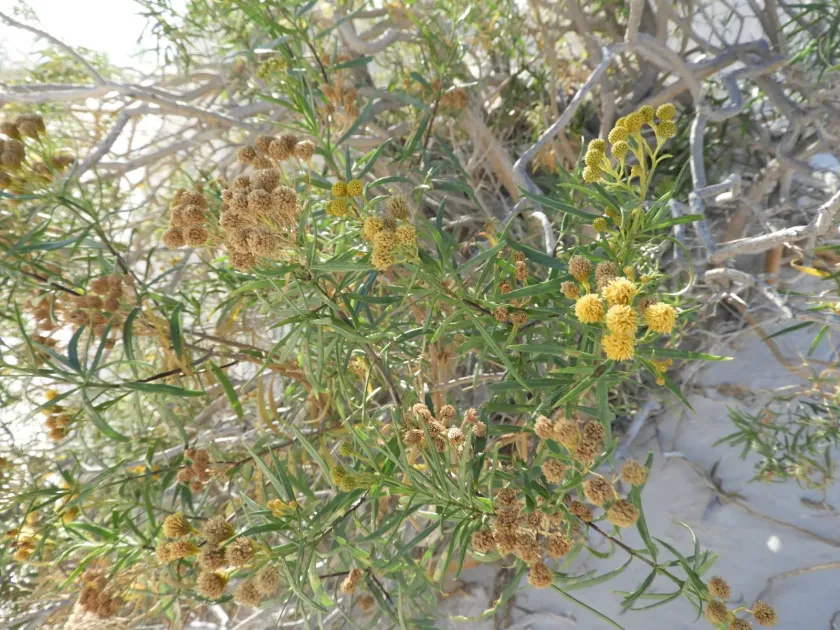
Description
Growing requirements
Varilla mexicana is a perennial subshrub belonging to the Asteraceae family. This species is native to the arid landscapes of Northern Mexico and adjacent regions, where it has evolved to survive in extreme environmental conditions.
Botanically, the plant is classified as a xerophyte, possessing specialized mechanisms to thrive in environments with significant water scarcity. Its physiological structure allows it to efficiently manage water retention during long dry spells.
The plant requires well-drained, porous soils to flourish. It is particularly sensitive to soil compaction and waterlogging, which can compromise the health of its root system and lead to physiological stress.
Regarding climate requirements, the species favors high solar radiation and low relative humidity. It exhibits excellent heat tolerance, making it an interesting candidate for arid land restoration or specialized xeriscaping.
Growth stages are heavily influenced by seasonal temperature cycles. During periods of favorable moisture, the plant initiates vegetative expansion, while in extreme heat, it enters a state of dormancy to ensure long-term survival.
Main diseases and pests
The primary threats to Varilla mexicana are fungal pathogens that thrive in damp environments. Root pathogens are particularly destructive if the soil drainage is inadequate, leading to rapid decay of the plant tissues.
While the plant is generally resistant to many herbivores, certain insects may occasionally target younger, softer growth stages. Managing such threats usually involves maintaining optimal environmental conditions rather than chemical intervention.