
Valeriana saxicola
Valeriana saxicola
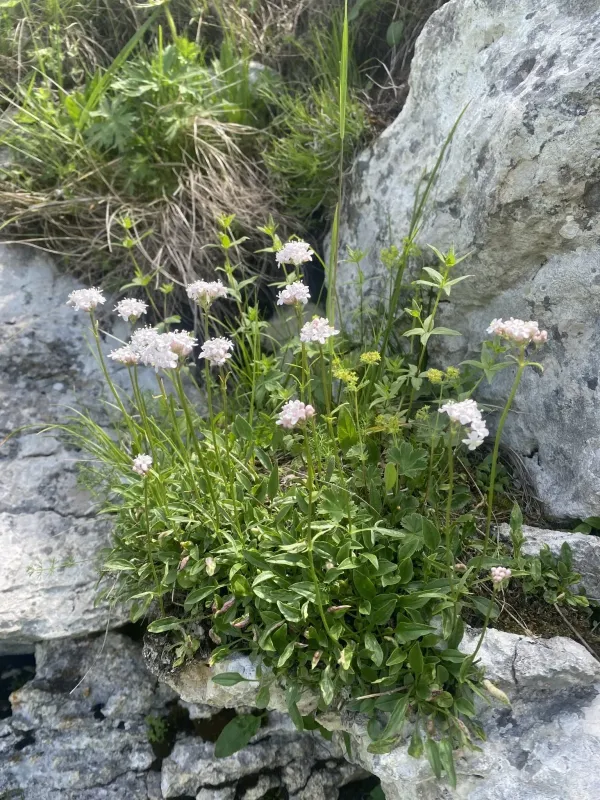
Description
Sowing dates
Valeriana saxicola is a perennial herbaceous plant belonging to the Caprifoliaceae family. Seeds are typically sown in the spring, once soil temperatures reach 10-12 degrees Celsius, or in late autumn into prepared garden beds.
Successful germination of valerian seeds requires a consistent level of substrate moisture. The planting depth should not exceed 0.5-1 centimeter, as the small seeds require surface exposure to receive sufficient sunlight.
Seedlings usually emerge within 14-20 days provided that stable watering is maintained. The plant exhibits a slow growth rate during the initial stages of development, making it critical to keep the beds clear of weeds.
When using the seedling method, seeds are sown in trays during March. Transplanting into open soil occurs when the seedlings develop two to three true leaves, which typically happens in the second half of May.
The planting scheme involves spacing plants 25-30 centimeters apart within rows. Row spacing should be at least 45-50 centimeters to ensure adequate aeration and facilitate easier soil maintenance.
Growing requirements
Valeriana saxicola has specific growth requirements, stemming from its natural habitat in mountainous regions. The plant prefers well-drained, calcareous, or stony soils with a neutral or slightly alkaline pH level.
This crop is light-loving; therefore, open fields protected from strong winds are selected for commercial production. In shaded conditions, the concentration of essential oils within the rhizomes decreases significantly.
Moisture availability is a vital development factor, although water stagnation in the root zone must be avoided. The plant is extremely sensitive to waterlogging, which can lead to rapid decay of the root system.
The optimal temperature range for valerian vegetation is between 15 and 22 degrees Celsius. During the rosette leaf formation period, the plant can withstand short-term temperature fluctuations without significant damage.
Applying organic fertilizers, such as humus or compost, during autumn soil preparation is recommended to stimulate root growth. Mineral fertilizers high in phosphorus and potassium should be applied in spring to improve raw material quality.
Yield
The yield of Valeriana saxicola depends heavily on soil preparation and consistent moisture management throughout the vegetation period. On average, commercial-grade product begins to form in the second year after planting.
Under intensive cultivation technologies, one hectare can produce between 15 and 20 centners of dried rhizomes. This figure varies significantly based on regional climate conditions and the methods used for primary processing.
The highest concentration of active substances, specifically valerenic acid, is achieved through proper adherence to agronomic practices. Timely removal of flower stalks is an important step if the goal is to maximize root mass rather than seed production.
The mass of a single mature plant's rhizome can reach 50-100 grams when dried, provided there is enough space for growth. Plant density in the field directly determines the final output of dry material per unit area.
Systematic loosening of rows promotes better air penetration to the roots, stimulating development. Agronomists recommend hilling the plants to prevent exposure of the root crown and to encourage the formation of secondary roots.
Main diseases and pests
The most dangerous pests for valerian include wireworms and cutworm caterpillars, which damage the root system and stem bases. Timely control of soil-dwelling pests is a key measure for protecting the crop.
Among fungal diseases, root rot poses the greatest threat, often developing when drainage is poor or the soil is excessively wet. Preventive measures include using high-quality seed material and following strict crop rotation protocols.
Powdery mildew can affect leaf surfaces during periods of high humidity and sudden temperature changes. Ensuring proper air circulation between plants is essential to prevent the spread of the disease.
Pests like aphids may settle on flower stalks, extracting sap and weakening the plant's overall health. In cases of severe infestation, biological control agents approved for medicinal crops are applied.
Regular phytosanitary monitoring is vital for the early detection of disease outbreaks. Promptly removing affected plants along with their roots helps halt the spread of infection to neighboring plants.
Harvesting
Harvesting Valeriana saxicola raw material is primarily done in the autumn of the plant's second year, as the above-ground foliage begins to die back naturally. During this phase, the rhizomes contain the maximum level of biologically active compounds.
Rhizomes are carefully extracted from the soil using garden forks, taking care to avoid mechanical damage. Maintaining root integrity is crucial to preserve the concentration of essential oils and other medicinal components.
Immediately after digging, the rhizomes must be cleaned of soil, washed in cold running water, and stripped of remaining stems. This process should be carried out as quickly as possible to avoid long-term soaking.
Drying is performed in specialized drying chambers at temperatures not exceeding 40 degrees Celsius to prevent the loss of active compounds. Natural air-drying in well-ventilated, shaded areas on racks is also permissible.
The final dried material should retain a specific aroma and exhibit brittleness when the root is bent. After drying, the product is sorted to remove impurities and damaged parts, then packed in airtight containers for storage.