
Ulva compressa
Ulva compressa
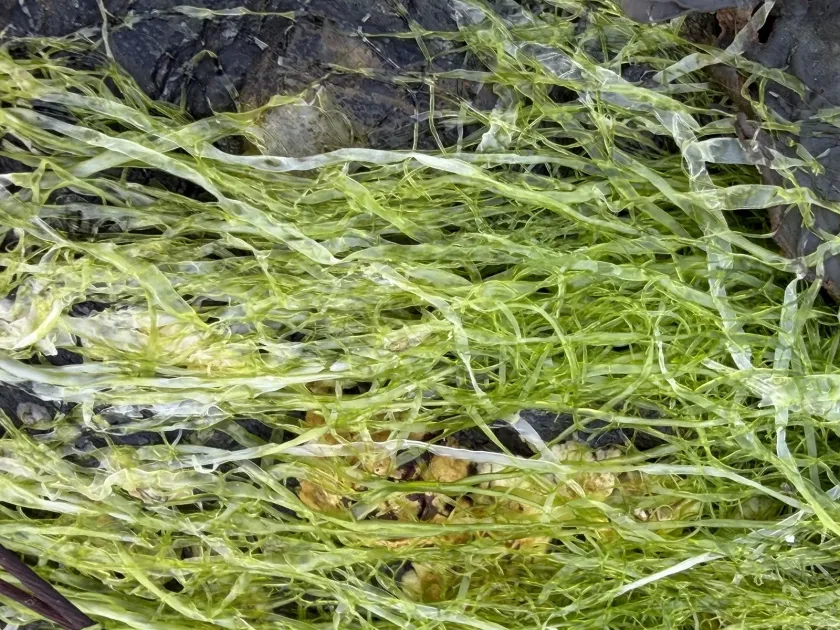
Description
Growing requirements
Ulva compressa, commonly known as a type of sea lettuce, belongs to the Ulvaceae family. It is a filamentous, green macroalgae characterized by its distinctive tubular, branched structure which can grow up to 30 cm in length.
This species is widely distributed across temperate and tropical coastal regions. It typically anchors itself to rocky substrates, shells, or harbor structures using a small holdfast, exhibiting high resilience to varying environmental conditions.
Ulva compressa thrives in well-lit, nutrient-rich environments. It is remarkably tolerant to salinity fluctuations, allowing it to flourish in estuarine zones, tide pools, and areas impacted by freshwater runoff.
Optimal growth requires consistent water flow and temperatures ranging between 15°C and 22°C. High levels of nitrogen and phosphorus facilitate rapid biomass accumulation, making it a robust candidate for intensive farming.
Cultivation systems usually involve suspended nets or ropes where the algae can attach and grow. Because of its rapid vegetative reproduction, it can be propagated efficiently in both land-based tanks and offshore sea farms.
Yield
The yield potential of Ulva compressa is exceptional due to its high photosynthetic efficiency and rapid nutrient absorption rates. Under managed conditions, it produces significant biomass in short periods.
Agricultural use is diverse, ranging from its role as a high-protein supplement in livestock feed to its primary function in sustainable aquaculture. It provides essential micronutrients and vitamins for farmed fish and crustaceans.
Bioremediation is a key economic value of this species. It is frequently employed in Integrated Multi-Trophic Aquaculture (IMTA) systems to strip excess nutrients from fish farming effluents, improving water quality.
In the food and supplement industry, Ulva compressa is harvested for its unique polysaccharides, which are utilized in nutraceuticals and cosmetic formulations due to their gelling and soothing properties.
Harvesting is typically done through partial biomass removal. This technique ensures the remaining population can rapidly regenerate, allowing for multiple harvests within a single growing season.
Main diseases and pests
Pathogenic outbreaks, specifically bacterial infections triggered by poor water circulation, represent the primary threat to healthy seaweed crops. Stagnant water conditions quickly lead to tissue necrosis.
Competition from epiphytic algae can severely inhibit growth by blocking light and absorbing available nutrients. Regular maintenance of cultivation nets is necessary to keep the crop clean and healthy.
Grazing by marine invertebrates and small mollusks can significantly reduce yield. Protective mesh enclosures are essential in open-water environments to keep herbivores away from the developing seaweed.
Climate-related temperature spikes above 28°C are detrimental to Ulva compressa, often leading to large-scale bleaching and crop loss. Temperature monitoring is crucial for successful large-scale operations.
Environmental contamination remains a significant concern. Accumulation of heavy metals or pollutants in the tissue makes the algae unsuitable for food use, necessitating regular monitoring of the local water quality.