
Tupeia antarctica
Tupeia antarctica
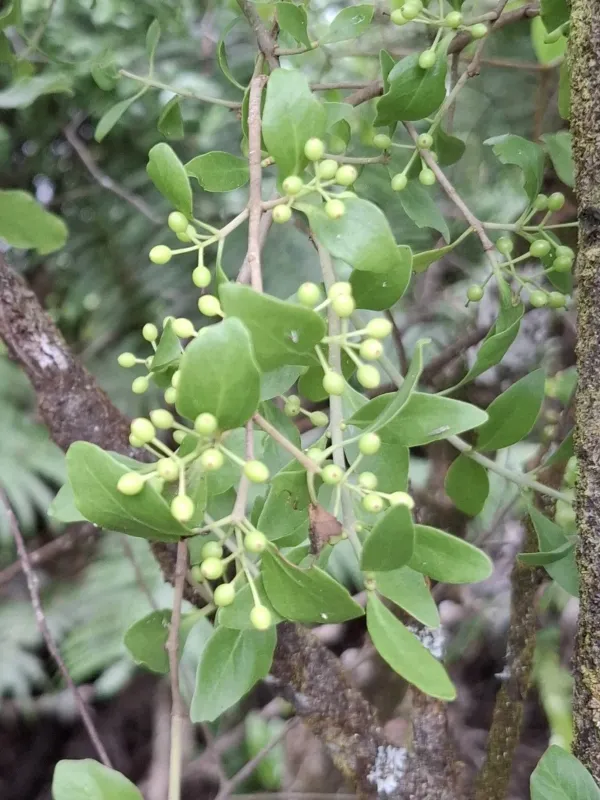
Description
Growing requirements
Tupeia antarctica is a hemiparasitic shrub belonging to the family Viscaceae. Unlike common agricultural crops, this species is a native component of New Zealand’s ecosystem, living as an obligate parasite on a variety of indigenous host trees.
The plant grows by attaching itself to the branches of its host using haustoria. These specialized organs penetrate the bark and xylem of the host tree, allowing the parasite to extract essential water and minerals directly from the tree's vascular system while retaining the ability to photosynthesize.
It thrives in humid, temperate forested environments throughout New Zealand. The plant prefers stable conditions where the canopy provides sufficient protection from direct, harsh sunlight and prevents excessive moisture loss during drier periods.
The host range is quite diverse, including species from genera such as Pseudopanax, Coprosma, and Pittosporum. The choice of host tree significantly influences the growth rate and overall health of the Tupeia population.
Reproduction relies heavily on biotic dispersal. Native birds consume the sticky berries and transfer seeds between host trees. This symbiotic relationship is crucial for the survival of the species, as it requires specific environmental and ecological conditions to complete its life cycle.
Main diseases and pests
Habitat loss represents the most significant threat to the survival of Tupeia antarctica. As forests are cleared for agriculture or urban development, the number of available host trees decreases, leading to localized extinctions of the species.
Invasive mammalian species, such as possums and rats, pose a severe threat by consuming the berries and damaging the canopy structure. This competition for resources reduces the successful seed dispersal rates and stresses the health of both the host and the parasite.
The decline in native bird populations due to predation has disrupted the natural distribution cycle. Without reliable seed dispersers, the plant cannot colonize new areas, leading to isolated and genetically stagnant populations.
Climate change and subsequent changes in microclimates affect the humidity levels within the forest. Since Tupeia is sensitive to atmospheric moisture, the drying of forest interiors poses an ongoing risk to its physiological viability.
Diseases that affect native trees indirectly impact Tupeia. If a host tree's health declines due to pathogens or environmental stress, the parasitic Tupeia loses its primary resource, often resulting in the death of the parasitic shrub itself.