
Trithrinax campestris
Trithrinax campestris
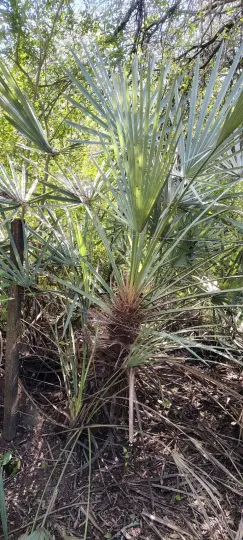
Description
Growing requirements
Trithrinax campestris is a distinct species of fan palm belonging to the Arecaceae family. Known commonly as the blue needle palm, it is native to the arid regions of Argentina and Uruguay, where it has evolved to thrive in dry, exposed, and rocky environments.
This species is highly valued in horticulture for its exceptional cold hardiness and striking, silver-blue foliage. It requires a sunny, well-ventilated location to thrive, as it is strictly heliophilic and does not perform well in low-light environments.
Regarding climate adaptation, this palm is resilient to significant fluctuations in temperature and can withstand frost down to approximately -10°C. It is an excellent choice for landscapes that experience dry winters and warm, sunny summers.
The soil requirements are strict: the medium must be exceptionally well-draining. While the plant can tolerate nutrient-poor, rocky, or sandy substrates, it will suffer severely if planted in heavy clay soils that retain excess water for extended periods.
In terms of management, the palm requires a conservative watering schedule. Over-irrigation is the most common cause of failure in cultivation. During the active growth season, water should be applied deeply but infrequently, allowing the substrate to dry out between sessions.
Main diseases and pests
The primary threats to the health of Trithrinax campestris are fungal infections associated with poor drainage. Root rot is the most devastating disease, typically triggered by saturated soil conditions that inhibit root respiration and invite opportunistic pathogens.
Pest pressure often includes infestations by mealybugs and spider mites. These pests thrive in dry environments and can quickly populate the base of the petioles, where they feed on sap, causing general physiological stress and visible damage to the leaves.
Scale insects represent another significant threat, attaching themselves to the sturdy, fibrous trunk or the undersides of the leaves. Their feeding habits extract essential nutrients, leading to yellowing or stunted growth if the infestation is not managed early.
Effective management strategies should focus on preventive care, including maintaining a clean planting area and ensuring proper air circulation around the crown. Routine inspection is essential to identify the initial stages of pest colonization before they reach critical levels.
When chemical intervention is required, contact and systemic insecticides should be applied carefully. It is vital to ensure that treatments penetrate the dense, fibrous layers of the palm, where pests often hide, while minimizing the risk of phytotoxicity to the palm's unique foliage.