
Trachypogon spicatus
Trachypogon spicatus
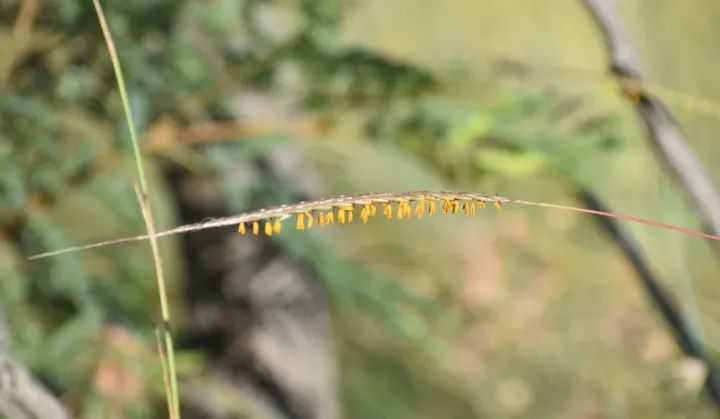
Description
Sowing dates
Sowing Trachypogon spicatus is best performed at the onset of the rainy season to provide the necessary moisture for germination. In tropical agricultural contexts, this process is frequently integrated into the restoration or establishment of extensive grazing lands.
Seed placement should be shallow, as these small seeds lack sufficient energy reserves to penetrate deep soil layers. Using high-quality, fresh seeds is critical for achieving a consistent germination rate across the field.
Drilling the seeds in rows with 30 to 45 centimeters of spacing is recommended for optimal pasture structure. Broadcasting the seeds is possible but requires a higher seeding rate to compensate for uneven distribution.
Seedlings of this species are known for slow initial growth, making weed management essential during the early stages of development. Regular weeding or chemical control of competitive plants is necessary to secure the grass's establishment.
The optimal soil temperature for germination ranges between 22 and 28 degrees Celsius, which aligns with the typical thermal environment of its native savanna habitats.
Growing requirements
Trachypogon spicatus is a perennial grass belonging to the Poaceae family. It is widely distributed across the savannas of Africa and South America, serving as a foundational species in these ecosystems.
This crop is highly adapted to acidic and nutrient-poor soils, making it an excellent candidate for the agricultural utilization of marginal land. It demonstrates remarkable resilience to prolonged drought periods by entering a dormancy phase.
Well-drained soil is a primary requirement for the healthy growth of this species, as waterlogging can cause significant root damage. The plant thrives in open, sunny environments and does not tolerate competition from woody vegetation.
The grass develops a deep root system that enables it to extract moisture from lower soil horizons during dry spells. This anatomical feature ensures its survival in challenging climatic conditions.
Agronomic maintenance benefits from moderate applications of phosphorus fertilizers, which assist in strengthening the root architecture during the crop's first two years of development.
Yield
The primary agricultural use of Trachypogon spicatus is in the management of extensive pastures for cattle grazing. It serves as a reliable source of fiber for ruminants, particularly when more nutritious grasses are unavailable due to dry conditions.
Biomass yield fluctuates significantly depending on the management intensity and soil fertility. While its nutritional value is lower compared to intensive cultivars, its survival rate in harsh conditions is its greatest economic advantage.
Nutritional quality is at its peak during the vegetative stage. As the plant enters the flowering phase, its digestibility decreases significantly, necessitating a strictly monitored grazing schedule to maintain livestock weight.
The species exhibits good regeneration capacity after grazing, provided that stocking rates are kept moderate. Overgrazing often results in the depletion of the root mats and the encroachment of undesirable invasive weed species.
Harvesting for hay is possible but must be performed before the stems become overly lignified. Timely harvesting ensures that the forage maintains enough nutritional density for effective use.
Main diseases and pests
Leaf spot diseases, caused by various fungal pathogens, are the most frequent health issues affecting Trachypogon spicatus, particularly in humid or stagnant conditions. These infections can lead to reduced biomass yields.
Pests that target the inflorescences or seeds can significantly impede seed production efforts. Effective monitoring and occasional insecticide use may be required on seed-multiplication plots.
The species' natural immunity to many pathogens is compromised if cultivated in large-scale monocultures without adequate spatial rotation. Maintaining ecological diversity helps suppress the spread of localized diseases.
Uncontrolled burning practices, often used to clear pastureland, can weaken the plants and increase their susceptibility to opportunistic pathogens. Regulated fire management is encouraged to preserve crop health.
The best preventative strategy involves rotational grazing, which allows the grass to recover and prevents the accumulation of pests and soil-borne pathogens in the root zone.