
Trachypogon secundus
Trachypogon secundus
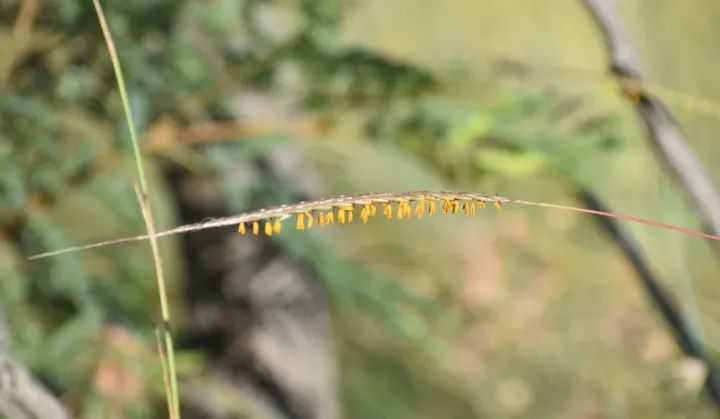
Description
Growing requirements
Trachypogon secundus is a perennial grass species belonging to the Poaceae family. It is predominantly found in African savannas and open woodlands, where it thrives in warm environments.
This grass is well-adapted to well-drained, sandy, or loamy soil types. Its biological structure allows it to withstand significant periods of moisture deficit, making it drought-tolerant.
The plant is heliophilous, requiring full sunlight exposure to maintain robust growth and development. It does not perform well in shaded environments or dense forest understories.
Temperature plays a crucial role in its lifecycle, with active growth phases occurring within the range of 20 to 30 degrees Celsius. It can tolerate intense heat common in its native range.
Consistent, moderate moisture is preferred, but the plant is highly sensitive to waterlogged conditions. Proper soil aeration is essential for preventing root-related pathogens.
Yield
The primary agricultural use of Trachypogon secundus is as a forage resource for livestock grazing. It serves as a vital component of natural pastures in arid and semi-arid regions.
In its vegetative stage, the plant provides acceptable nutritional value. Livestock species readily consume the foliage, contributing to their overall diet in savanna grazing systems.
The biomass yield is heavily dependent on rotational grazing practices. Effective management ensures that the plant regrows efficiently, maintaining high yields over successive seasons.
Beyond its feed value, the species acts as a soil stabilizer. Its deep root system is highly effective in controlling soil erosion in fragile environments exposed to wind and water runoff.
As the plant progresses toward maturity, the stems lignify, significantly reducing palatability and nutritional content. Strategic grazing management is necessary to utilize the biomass before maturation.