
Tozzia carpathica
Tozzia carpathica
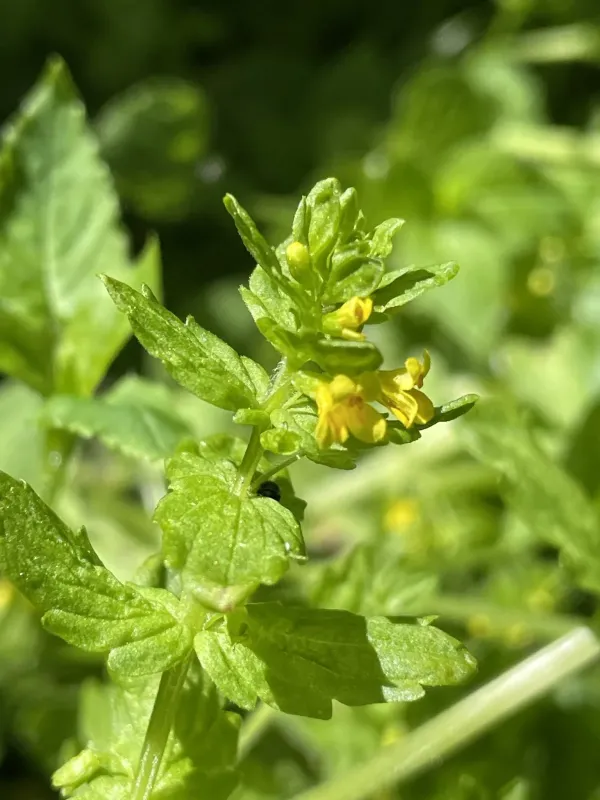
Description
Growing requirements
Tozzia carpathica is a perennial herbaceous plant belonging to the Orobanchaceae family. Unlike typical crops, this species functions as a hemiparasite, extracting some of its nutrients from host plants through specialized structures.
The plant originates from the mountainous regions of Central and Eastern Europe, specifically the Carpathians. It predominantly inhabits moist, shaded environments such as mountain stream banks and humid slopes.
Botanically, it features a distinct stem structure where lower leaves are reduced to scales, while upper leaves are green and capable of photosynthesis. The plant relies on haustoria to anchor onto the roots of adjacent vegetation.
The environmental requirements for this species are strict. It demands high levels of atmospheric humidity and consistent soil moisture, which makes it highly sensitive to any fluctuations in the mountain microclimate.
There is no agricultural use for Tozzia carpathica. As a protected and rare botanical entity, it is primarily studied for its ecological role and its complex interaction with host plant communities in high-altitude zones.
Main diseases and pests
The primary threats to Tozzia carpathica include habitat loss resulting from deforestation and changes in mountain water management. The degradation of traditional alpine landscapes poses a significant risk to its survival.
Information regarding specific pests and diseases for this species is limited due to its non-agricultural status and wild habitat. It remains largely resilient to typical agricultural pathogens but is highly susceptible to the loss of its specific host plants.