
Toxicodendron vernicifluum
Toxicodendron vernicifluum (Stokes) F.A. Barkley
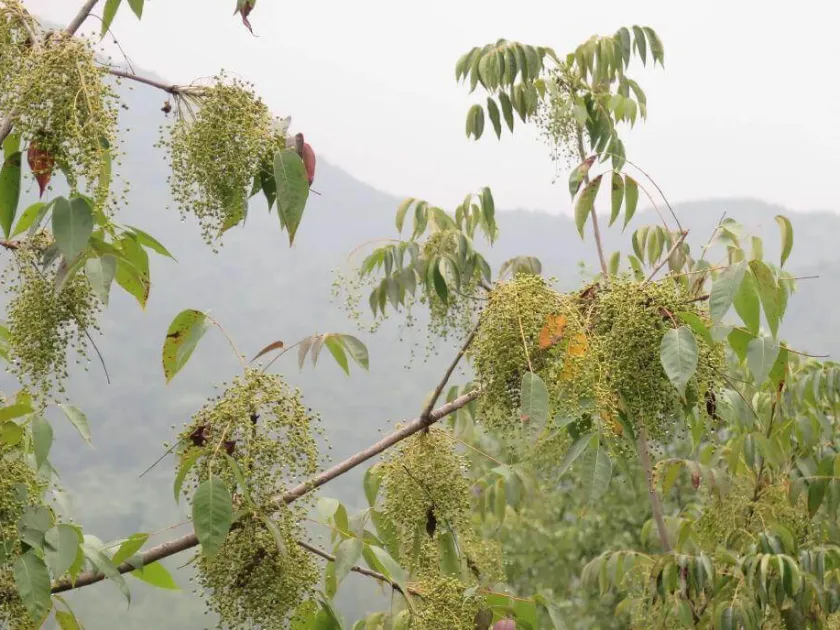
Description
Sowing dates
Propagation of Toxicodendron vernicifluum is primarily achieved through seeds or vegetative methods using root suckers. Seeds require a period of stratification at low positive temperatures for several months to break dormancy and improve germination rates.
Sowing in nurseries is carried out in early spring as soon as the soil warms up, typically in April. Seeds are planted at a depth of 2–3 centimeters in well-drained, fertile soil to ensure successful emergence.
Seedlings emerge relatively slowly, so keeping the nursery beds free of weeds during the first year is crucial. For the first two years, seedlings are grown in nursery rows with regular irrigation and protection from direct sunlight during intense summer heat.
Vegetative propagation involves using cuttings or root suckers, which are planted in prepared trenches. This method is preferred for clones to ensure the offspring retain the superior lacquer-producing qualities of the parent tree.
The optimal planting density on plantations depends on the intended harvesting method, but a spacing of 3x3 or 4x4 meters is common. This allows enough space for the trunk to develop, which is essential for systematic tapping.
Growing requirements
The lacquer tree thrives in warm, humid climates with a distinct growing season. It performs best in regions with moderately hot summers and mild winters, as young trees are sensitive to severe frost damage.
The crop requires well-drained sandy or light loamy soils. Waterlogging is extremely detrimental to root health and significantly decreases the quality and quantity of the lacquer sap produced by the tree.
As a light-loving species, it should be planted in open, well-lit areas protected from strong winds. Growth rates drop significantly in shaded conditions, and sap production is noticeably reduced.
Maintaining moderate soil moisture is essential for stable growth. During dry periods, supplementary irrigation is necessary, particularly for young trees under five years of age.
Safety is a critical requirement when working with this species. The leaves and sap contain urushiol, a potent allergen that causes severe skin contact dermatitis, necessitating strict adherence to protective gear and hygiene protocols.
Yield
The economic value of Toxicodendron vernicifluum lies in the extraction of high-quality natural lacquer known as urushi. Tapping typically begins when trees reach 7–10 years of age, or when the trunk diameter is sufficient for harvesting.
The tapping process involves making controlled horizontal incisions in the bark, from which a viscous sap slowly exudes. The harvesting season spans from late spring to early autumn, depending on local climatic conditions.
Yields per tree are relatively low, which contributes to the high market value of refined urushi. A mature tree can provide only a few dozen grams of raw lacquer per season, reflecting its premium status.
Once a tree reaches the end of its productive lifecycle, it is often harvested for its timber. The wood is prized for its durability and is utilized in high-end woodworking and decorative cabinetry.
Overall plantation productivity is dependent on tree maturity and tapping intensity. Managed, sustainable tapping cycles allow the trees to produce sap over many years without compromising their long-term health.
Main diseases and pests
Toxicodendron vernicifluum is naturally resilient to many common agricultural pests due to the chemical composition of its sap. However, it can still be affected by leaf-eating insects, particularly during the early nursery stages.
Fungal diseases pose the greatest risk, often entering through improper incision sites during tapping. Pathogens can colonize the inner wood, potentially leading to stem rot and the premature decline of the specimen.
Root rot is another significant concern in poorly drained plantation soils. Preventive measures include strict adherence to drainage management and regular monitoring of the base of the trunk for signs of decay.
Small rodents can damage young saplings by gnawing on the bark during winter. Using protective mesh guards or trunk wraps during the first few years of growth effectively minimizes potential losses.
Effective pest control requires an integrated approach, ranging from selecting disease-free planting stock to maintaining rigorous hygiene standards during the tapping process to prevent cross-contamination.
Harvesting
Harvesting urushi is a skilled, labor-intensive task. Harvesters use specialized spatulas to collect the sap as it oozes from horizontal cuts made into the tree's cambium layer throughout the harvest season.
Collected raw lacquer is filtered to remove impurities such as bark or wood fibers. The sap then undergoes dehydration and homogenization processes to reach the stable consistency required for professional lacquer work.
Temperature control is paramount during storage and transport. Exposure to direct sunlight or excessive heat can trigger premature polymerization, rendering the lacquer unusable for its intended application.
Timber harvest is conducted once the tree has surpassed its peak production phase or after it has been exhausted by long-term tapping. The resulting wood is valued for its unique properties and aesthetic finish.
The entire harvesting schedule is strictly regulated to balance sap yield with the tree's physiological limits, ensuring that the plantation remains productive for the duration of its intended lifecycle.